Sunglasses Guides
Clip-On Sunglasses for Prescription Glasses: Are They Worth It for Daily Use?


For many prescription glasses wearers, yes. They add sun protection to the frames you already wear, take up little space, and make indoor and outdoor transitions easier. Their value depends on a secure fit, proper lens coverage, useful tint, and reliable UV protection. Keep reading to see how clip-ons compare with prescription sunglasses and which features make a pair comfortable enough for commuting, driving, errands, travel, and other everyday situations.
Clip-On Sunglasses vs. Prescription Sunglasses
Both options provide clear prescription vision in bright conditions, but they work differently. Clip-ons place tinted lenses over your everyday glasses, while prescription sunglasses combine vision correction and tint in one separate pair.
The table below shows how they compare during daily use.
Feature | Clip-On Sunglasses | Prescription Sunglasses |
|---|---|---|
Vision correction | Comes from your regular glasses | Built into the sunglass lenses |
Light changes | Attach or remove the clip | Change between two pairs |
Storage | Requires a small clip case | Requires a full glasses case |
Familiar fit | Keeps your usual prescription frame | Uses a separate frame |
Appearance | Changes the look of your current glasses | Offers a completely different style |
Polarized options | Available on selected clips | Available with selected lenses |
Best use | Commuting, errands, travel, and backup needs | Long outdoor days and dedicated sunglass wear |
Neither option is automatically better for every person. Clip-on glasses offer quick changes and compact storage, while prescription sunglasses provide a complete second look for extended outdoor use.
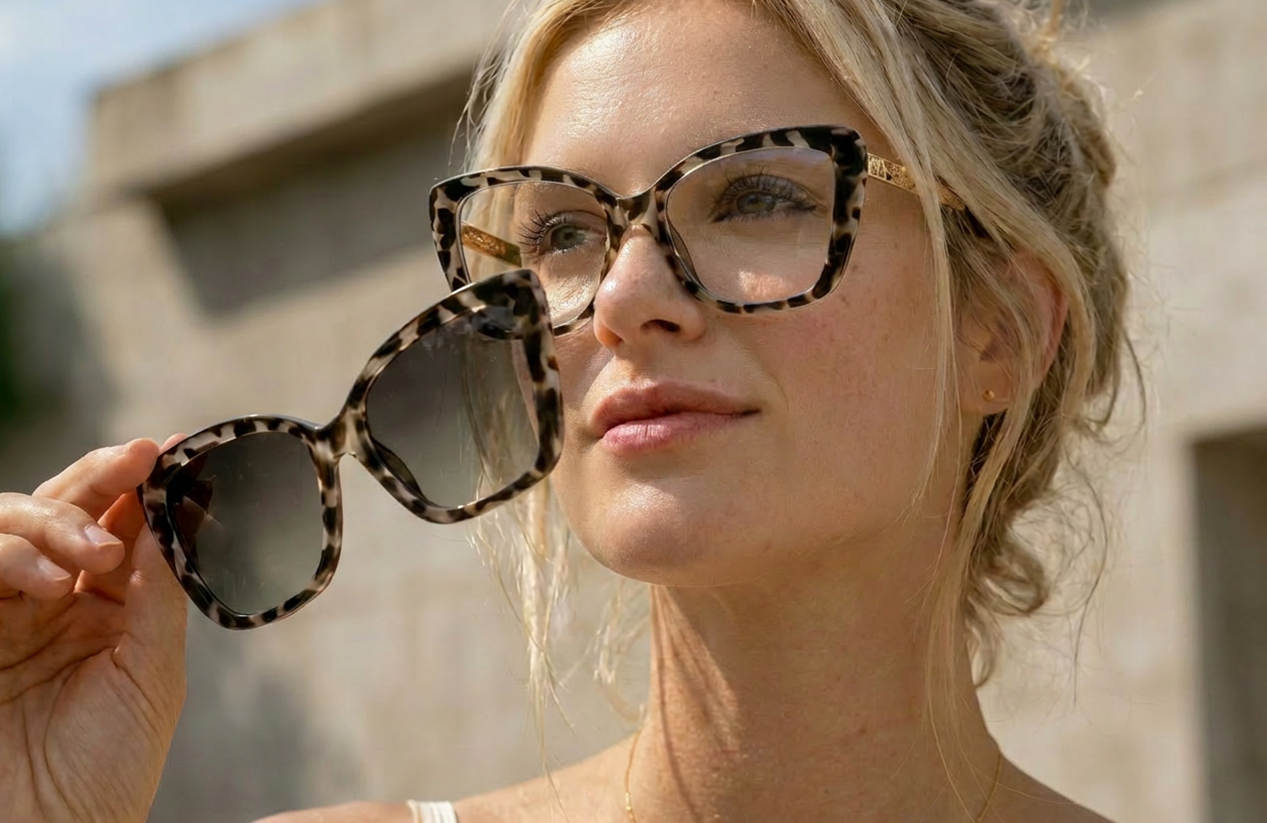
Clip-ons can be especially useful when you already have glasses that fit well. You keep the same bridge width, temple length, prescription, and frame feel throughout the day. When you step indoors, you only need to remove the tinted attachment.
Prescription sunglasses may appeal to people who want a larger sun frame, wider coverage, or a separate outdoor style. EFE offers a selection of sunglasses with prescription lens options for wearers who prefer a dedicated pair.
You can also own both. Use clip-ons for regular weekdays and keep prescription sunglasses for vacations, outdoor events, or long periods in bright sunlight.
When Clip-On Glasses Are More Convenient
Clip-ons work best when light conditions change several times during the day. Their small size and quick attachment make them useful in many common situations.
Commuting and Driving
A magnetic clip can be attached before you leave home and removed after you arrive at work. You do not have to place your prescription glasses in a case or search for another pair.
Polarized sunglasses can reduce glare reflected from roads, wet pavement, and other vehicles. Before driving, check that the tint is suitable for daytime use and that the lenses allow you to read the dashboard clearly. Some polarized lenses can make certain digital screens look dimmer from specific angles.
Errands and Outdoor Breaks
A typical afternoon may include a store visit, a short walk, a café stop, and several minutes in the car. Clip-ons make these short transitions easier because your prescription glasses remain on your face. They are also useful for lunch breaks, dog walks, school pickups, and other brief outdoor activities. Once indoors, place the clip in its case to keep the lenses clean and protected.
Travel and Backup Use
Clip-ons take up less space than a complete pair of sunglasses. A slim case fits easily inside a handbag, backpack, jacket pocket, or carry-on. They can also serve as backup sunglasses. Even if you own prescription sunglasses, keeping a clip with your everyday glasses gives you another option when the second pair is left at home.
How to Check the Fit and Stability of Clip-Ons
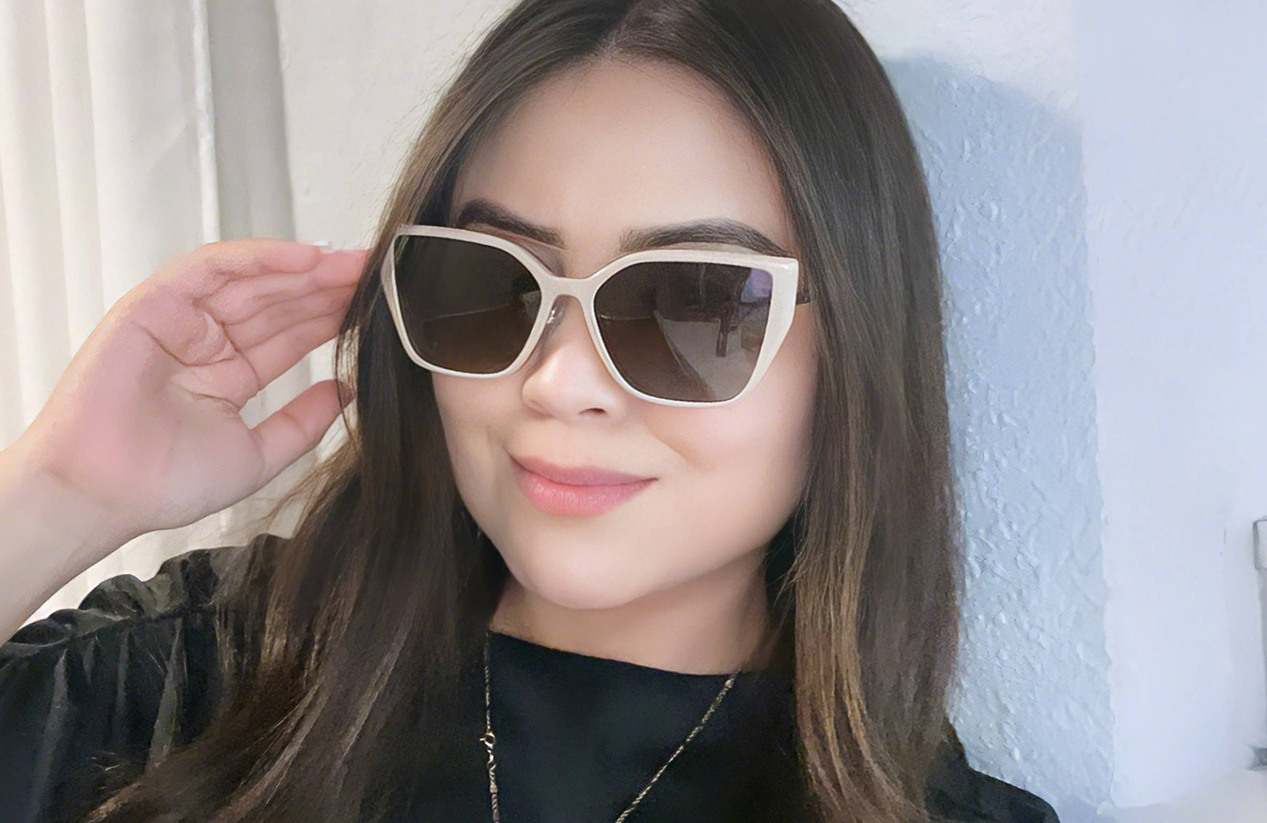
A well-fitting clip should remain centered and cover your prescription lenses without touching them. Check the shape, measurements, and attachment type before deciding whether a pair is suitable.
Match the Lens Shape and Size
The clip-on lenses should follow the general outline of your regular glasses. Round clip-on lenses may not fully cover wide rectangular prescription lenses, while oversized square clip-ons can look unbalanced on a small oval frame.
Compare these measurements:
Lens width
Lens height
Total frame width
Bridge position
A slightly larger clip may provide good coverage, but it should not block the hinges or interfere with the nose pads. A clip that is too small can leave uncovered areas around the edges of the prescription lenses.
Frame measurements are often printed inside one temple arm. You can also compare the clip dimensions on the product page for your current glasses.
Inspect the Attachment Method
Magnetic clip-ons are usually designed for compatible frames. The magnets should align naturally without twisting, bending, or forcing the attachment into place.
Traditional clip-ons use small hooks or grips. These contact points should hold the frame securely rather than press against the prescription lenses. Protected or padded grips can help avoid marks on the frame finish.
Flip-up models should move smoothly and remain steady in both positions. The raised lenses should not fall forward when you look down.
Perform a Simple Movement Test
Attach the clip and move as you normally would during the day. Look down, turn your head, walk across the room, and gently open and close the temple arms.
The clip should not:
Slide away from the center
Rattle during normal movement
Touch the prescription lenses
Pull the glasses down your nose
Make the frame feel front-heavy
A properly matched clip should feel stable during commuting, errands, walking, and casual outdoor use. Specialized sports may require eyewear designed for faster movement and greater coverage.
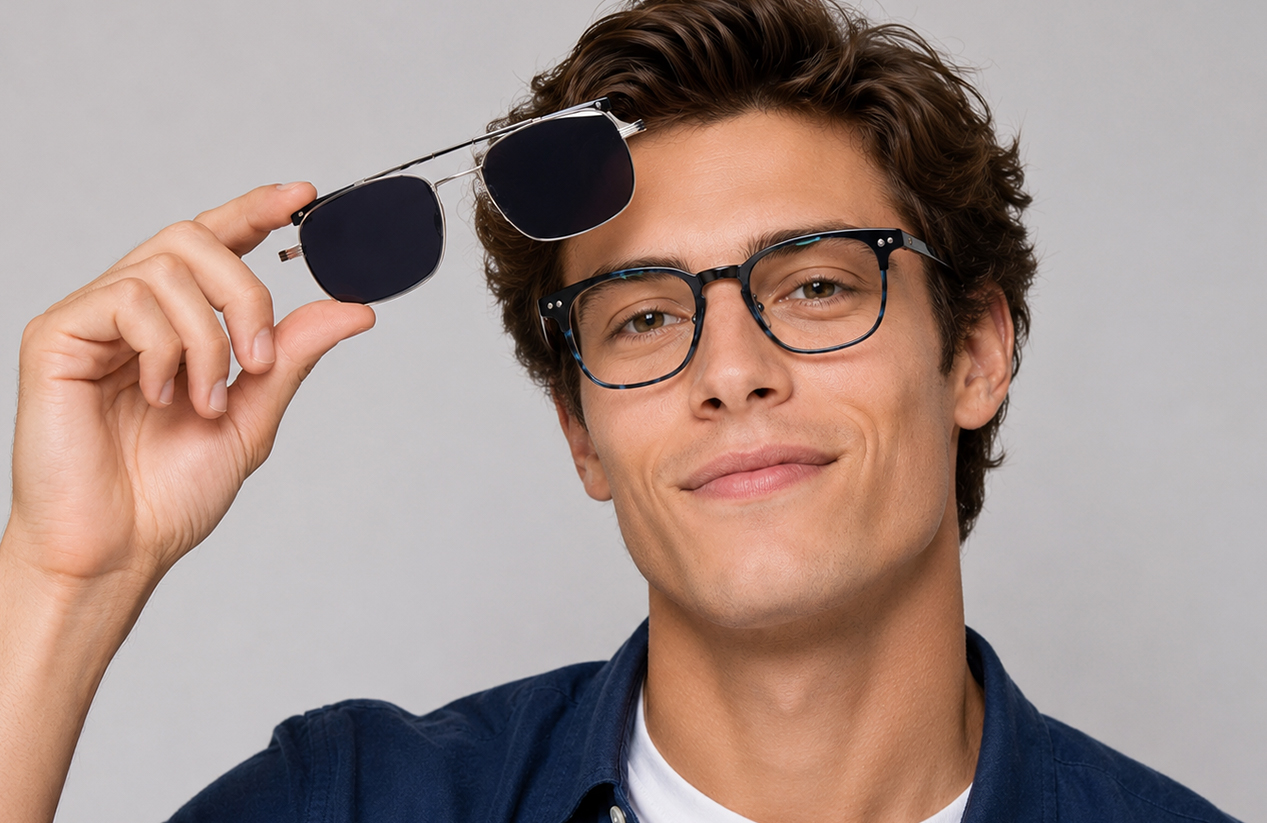
What to Check Before Ordering Clip-On Sunglasses Online
Product photos show the style, but measurements and lens details determine whether the clip will work well. Review the following information before ordering.
Frame compatibility: Check whether the clips are universal or designed for a specific frame. Frame-specific magnetic clips often provide more precise alignment. Universal clips can work well when their dimensions and attachment points match your glasses.
UV protection: Look for UV400 or 100% UV protection. The FDA explains that dark tint alone does not show how much UV protection sunglasses provide, so check the protection label rather than judging by tint color.
Polarization: Polarized lenses reduce reflected glare. This feature can be valuable for daytime driving, fishing, waterfront walks, and other activities around reflective surfaces. Polarization and UV protection are separate features, so check both.
Tint color: Gray is a versatile choice that keeps colors looking relatively natural. Brown or amber can create a warmer view and improve perceived contrast in some conditions. Gradient lenses are darker at the top and lighter near the bottom.
Lens coverage: Look closely at the listed lens width and height. The clip should cover the clear lens area without leaving large gaps or extending too far beyond the frame.
Weight: A lightweight attachment is usually more comfortable for daily wear. A heavy clip may pull the frame forward or place extra pressure on the nose.
Storage: Check whether the product includes a pouch or case. Clip-ons should not be placed loose beside keys, coins, or other hard objects.
EFE’s Cavyo clip-on lens options provide an example of the measurements, colors, and lens choices shoppers can review before ordering.
Choose Clip-On Sunglasses That Match Your Day
The best clip-on sunglasses match both your prescription frame and your normal activities. Start with fit, UV protection, and comfort before choosing color or style.
A few simple combinations can narrow the choice:
Choose magnetic clip-ons for frequent indoor and outdoor changes.
Consider polarized gray lenses for driving and everyday outdoor use.
Try brown or amber tint when you prefer a warmer view.
Select a lightweight clip if you wear small or delicate frames.
Keep a compact pair in your travel bag as a backup.
Consider prescription sunglasses for long outdoor days or a separate look.
Clip-ons are most valuable when they are easy enough to use every day. A secure, well-matched pair can turn familiar prescription glasses into a more flexible option for changing light conditions.
Find Clip-On Sunglasses That Fit Your Routine
Clip-on sunglasses offer a compact and convenient way to add sun coverage to the prescription glasses you already enjoy wearing. Compare the attachment, lens measurements, tint, polarization, and UV rating before choosing. Explore EFE’s clip-on sunglasses collection to find a practical match for commuting, travel, errands, and changing light throughout your day.
Clip-On Sunglasses FAQs
Q1. Can Clip-On Sunglasses Be Used With Progressive Glasses?
Yes. The progressive prescription remains in your regular lenses, while the clip adds tint and sun protection in front of them. Choose a clip that covers the full lens area so every viewing zone remains shaded.
Q2. How Should You Clean Clip-On Sunglasses?
Rinse away loose dust with clean water, then use a small amount of lens-safe cleaner. Dry the lenses with a clean microfiber cloth and avoid paper towels, clothing, or household cleaners.
Q3. Do Clip-On Sunglasses Work With Rimless Glasses?
Some models can work with rimless glasses, but compatibility depends on the attachment design. Check whether the clip is approved for your frame type and avoid attachments that place too much pressure on exposed lens edges.
Q4. How Long Do Clip-On Sunglasses Usually Last?
A well-made pair can last for years with careful handling and storage. Its lifespan depends on the attachment quality, frequency of use, and whether the lenses are protected from scratches and bending.