Lenses Guides
Lens Index for Glasses: How to Choose the Right Lens Thickness


How to Choose the Right Lens Index for Your Glasses
Thick lenses can change how glasses look, feel, and sit on your face. That is why lens index matters when ordering new glasses. It helps decide how thin your lenses can be based on your prescription, frame size, and lens material. The right lens index can make prescription glasses feel more balanced, especially when lens thickness is a concern.
What Lens Index Means
Lens index means how strongly a lens material bends light. A higher lens index can bend light more efficiently, so the lens may be made thinner for certain prescriptions.
This is why lens index is closely connected to lens thickness. If two lenses correct the same prescription, the higher-index option may look thinner than a standard lens.
High-index lenses are lenses made from materials with a higher refractive index. Refractive index means how much a material bends light as it passes through. These lenses are often considered when a prescription is stronger or when the wearer wants a slimmer lens look.
Lens index is not only about appearance. It can also affect lens weight, edge thickness, comfort, and frame choice.
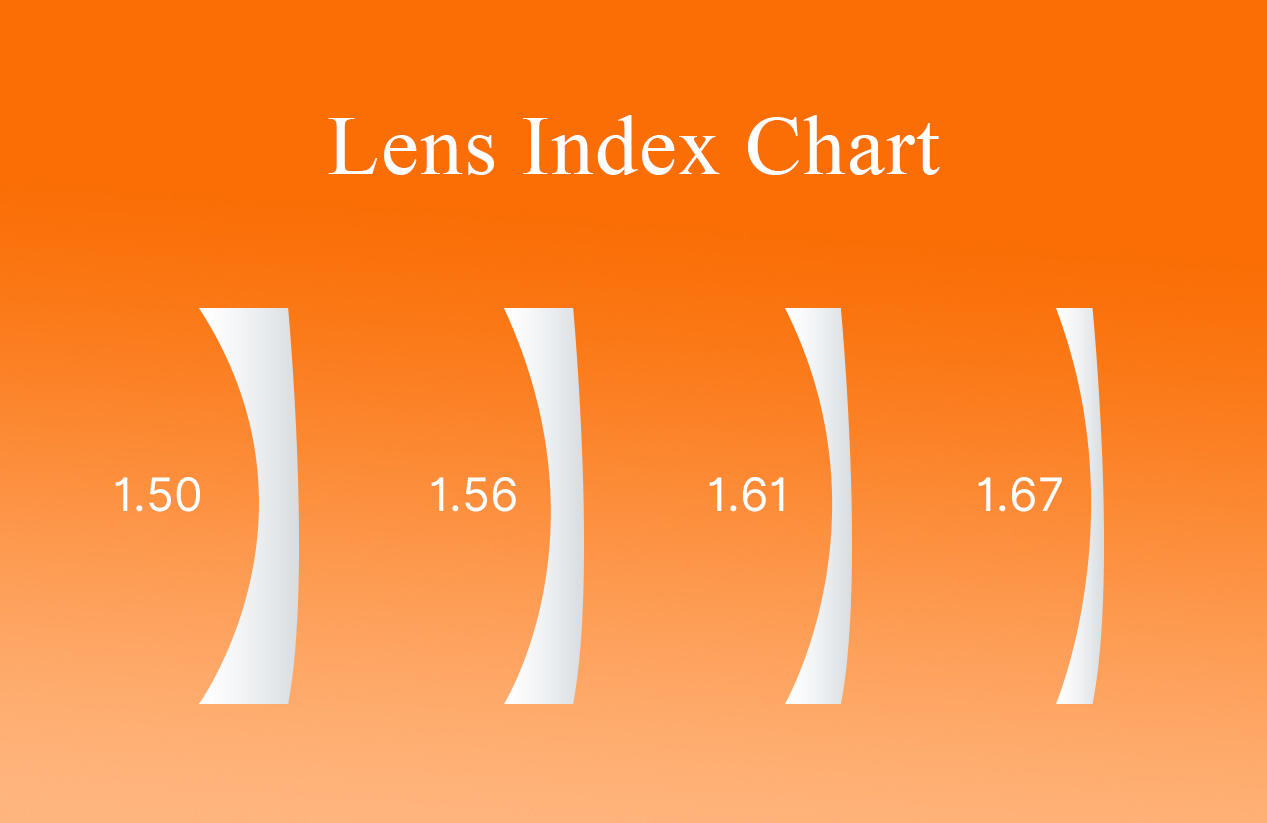
Lens Index Chart: 1.50, 1.56, 1.61, and 1.67 Compared
Lens index numbers can feel confusing at first. The main idea is simple: as the index number increases, the lens material can usually make certain prescriptions thinner.
The table below gives a simple comparison of common lens index options.
Lens Index | Common Use | Lens Thickness | What to Know |
|---|---|---|---|
1.50 Index | Mild prescriptions | Standard thickness | A practical starting point for many everyday glasses |
1.56 Index | Mild to moderate prescriptions | Slightly thinner than 1.50 | A balanced option for daily wear when a slimmer look is preferred |
1.61 Index | Moderate prescriptions | Thinner than 1.56 | Often used when lens thickness starts to matter more |
Moderate to stronger prescriptions | Noticeably thinner | A high-index option for reducing glasses lens thickness |
These index levels are general references, not fixed rules. Your best lens index can depend on prescription strength, frame size, lens shape, and personal comfort preferences.
A higher lens index can help reduce lens thickness, but it is not always necessary for every prescription. For mild prescriptions, a 1.50 or 1.56 lens may already look clean and feel comfortable. For stronger prescriptions, 1.61 or 1.67 high-index lenses may create a slimmer-looking result.
How Prescription Strength Affects Lens Index
Prescription strength is one of the biggest factors behind glasses lens thickness.
A glasses prescription is written information from an eye exam that tells how your lenses should correct vision. It may include values such as SPH, CYL, Axis, and ADD.
SPH, or sphere, is the main lens power for nearsightedness or farsightedness. CYL, or cylinder, corrects astigmatism. Axis shows the direction of astigmatism correction. ADD is added power for near vision in reading or multifocal lenses.
Prescription strength is measured in diopters, a unit used to show lens power. A higher number usually means the lens needs more correction.
Lens thickness changes differently depending on the type of prescription:
Nearsighted prescriptions: Minus lenses are usually thicker at the edges.
Farsighted prescriptions: Plus lenses are usually thicker in the center.
Astigmatism correction: CYL values can affect lens shape and thickness.
Stronger prescriptions: Higher prescriptions often benefit more from high-index lenses.
For example, someone with a mild prescription may not notice a big difference between 1.50 and 1.56. Someone with a moderate or stronger prescription may see a clearer difference when comparing 1.56, 1.61, and 1.67 lenses.
That is why lens index should not be chosen by number alone. A good lens choice should match the full prescription, not only one value.
Why Frame Size Also Affects Lens Thickness
Lens index is important, but frame size can make a big difference too. Even a high-index lens can look thicker in a large frame if the prescription is strong.
Frame size affects how much lens material is needed. Larger lenses usually require more material, which can increase edge thickness or center thickness depending on the prescription.
For lens thickness for glasses, pay attention to:
Lens width: Wider lenses may increase edge thickness for minus prescriptions.
Lens height: Taller lenses may add more lens area and weight.
Frame shape: Rounder or smaller shapes may reduce visible edge thickness for some prescriptions.
PD alignment: PD means pupillary distance, or the space between the centers of your pupils. Proper PD helps position the lens correctly in the frame.
Rim style: Full-rim frames may help hide lens edges better than very thin or rimless styles.
A smaller or moderate frame can often help strong prescriptions look cleaner. This does not mean everyone needs a small frame. It means frame size and lens index should work together.
If you want thinner-looking lenses, compare both the lens index and the frame measurements. A stylish frame still matters, but the frame should also support your prescription.
Is a Higher Lens Index Always Better?
A higher lens index can be helpful, but it is not automatically the best choice for every pair.
Higher-index lenses are often chosen to reduce glasses lens thickness. They may be especially useful for stronger prescriptions or larger lenses where thickness is more noticeable. However, mild prescriptions may not need the highest index to look good or feel comfortable.
The best index depends on the balance between:
Prescription strength
Lens thickness
Frame size
Lens weight
Visual comfort
Budget
Style preference
For some people, 1.50 or 1.56 may be enough. For others, 1.61 or 1.67 may create a better-looking result. The goal is not to pick the highest number. The goal is to match the lens material to the prescription and frame.
There is also a visual comfort factor. Some higher-index materials may have slightly different optical qualities compared with standard materials. Most people wear them comfortably, but people with detailed visual work or strong sensitivity should follow professional lens guidance when needed.
In simple terms, higher index can be useful when lens thickness matters. It should be chosen for a reason, not just because the number is higher.
What to Check Before Choosing Lens Index Online
Choosing lens index online becomes easier when you review the details that affect lens thickness, comfort, and appearance. Before placing an order, check these points:
Prescription strength: Stronger prescriptions often benefit more from high-index lenses.
SPH value: Higher plus or minus numbers can affect lens thickness.
CYL value: Astigmatism correction can influence lens shape and final thickness.
Frame size: Larger frames can make lenses look thicker, especially with stronger prescriptions.
Frame shape: Smaller or rounder frames may help reduce visible edge thickness.
Lens use: Daily wear, reading, driving, and office use may affect lens choices.
Lens material: Compare 1.50, 1.56, 1.61, and 1.67 lens options.
Lens coatings: Anti-reflective coating can help reduce reflections on the lens surface.
Style preference: A thinner lens may look cleaner in certain frame styles.
Budget: Higher-index lenses may cost more, so compare need and value.
Anti-reflective coating is a lens coating that helps reduce reflections on the lens surface. It does not change prescription strength, but it can make lenses look clearer and feel more comfortable for some daily use.
If the site recommends a lens index based on your prescription, use that as a helpful starting point. If you are unsure between two options, consider your prescription strength and frame size together.
For strong prescriptions, lens thickness can affect how the glasses look from the front and side. For mild prescriptions, comfort, coating, and frame style may matter more than choosing the highest index.
Build Your Lens Order Around Fit, Thickness, and Comfort
A good lens order starts with more than the index number. Review your prescription, frame size, lens thickness goals, coating options, and daily comfort needs before checkout. The right lens index should help your glasses look balanced, feel comfortable, and match the way you wear them every day.
FAQs
Q1. What Lens Index Is Best for Glasses?
The best lens index depends on your prescription strength, frame size, and lens thickness goals. Mild prescriptions may work well with 1.50 or 1.56 lenses, while stronger prescriptions may benefit from 1.61 or 1.67 options. A lens recommendation should match the full prescription and frame choice.
Q2. Does a Higher Lens Index Make Glasses Thinner?
Yes, a higher lens index can often make lenses thinner for certain prescriptions. The difference is usually more noticeable with stronger prescriptions. Frame size and shape also affect final glasses lens thickness, so index is only one part of the decision.
Q3. How Can I Reduce Lens Thickness for Glasses?
You can reduce lens thickness by choosing a suitable lens index, selecting a smaller or moderate frame, and checking lens material options. For stronger prescriptions, 1.61 or 1.67 high-index lenses may help create a slimmer look. A full-rim frame can also help make lens edges less noticeable.
Q4. Is 1.74 Lens Index Worth It?
A 1.67 lens index may be worth considering if you have a moderate to stronger prescription and want thinner-looking lenses. It can reduce lens thickness more than lower-index options. For mild prescriptions, 1.50 or 1.56 may already provide a good balance of comfort, appearance, and value.