
Learning Center
What Is Pupillary Distance? Why PD Matters When Buying Glasses Online


A glasses prescription tells the lens power, while pupillary distance (PD) helps position the optical center of the lenses in front of your pupils. This small measurement matters when ordering prescription glasses online because it helps connect your prescription to the frame you choose. Clear PD information makes the buying process easier, especially when choosing glasses online for daily wear.
What Is Pupillary Distance?
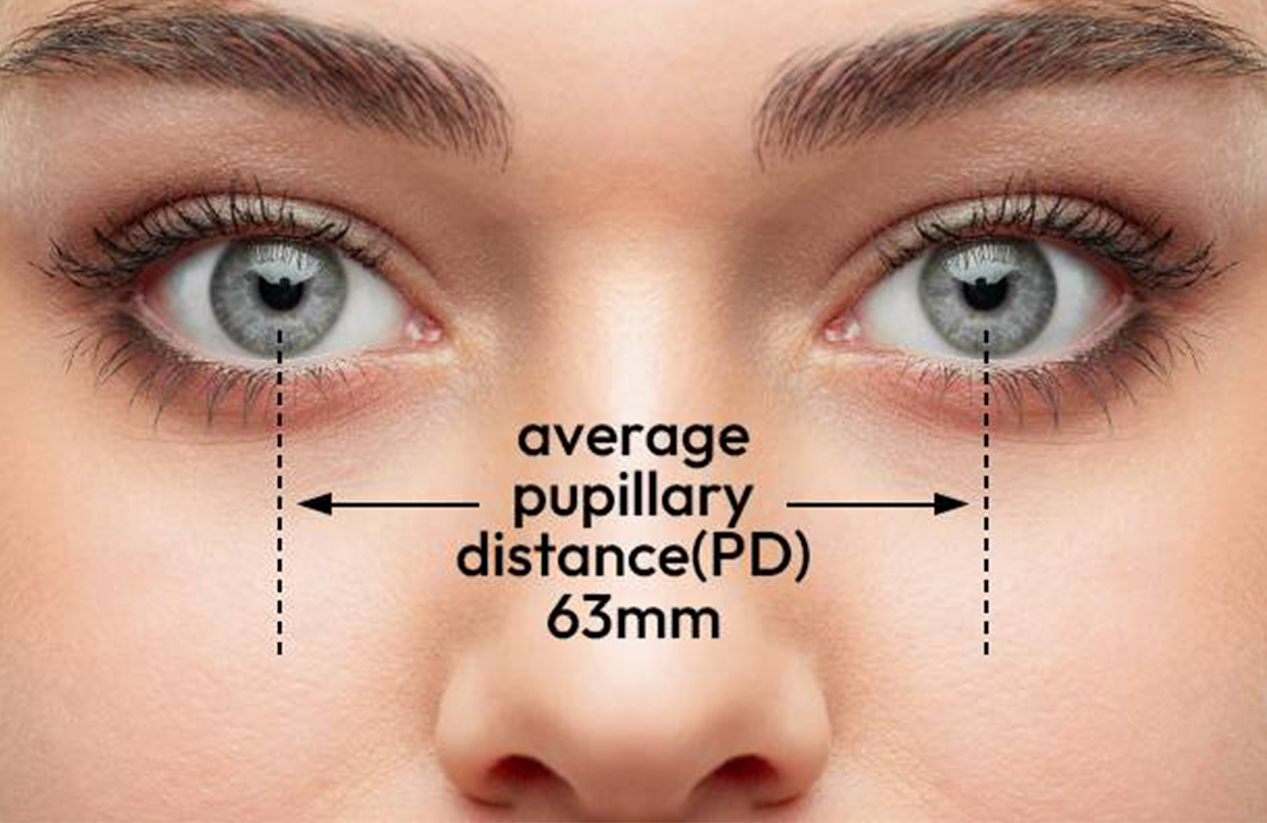
Pupillary distance is the distance between the centers of your pupils. It is usually measured in millimeters and often appears as PD. The pupil is the dark center of the eye. PD tells the lens maker where your eyes sit behind the frame, so the lenses can be positioned correctly in the glasses.
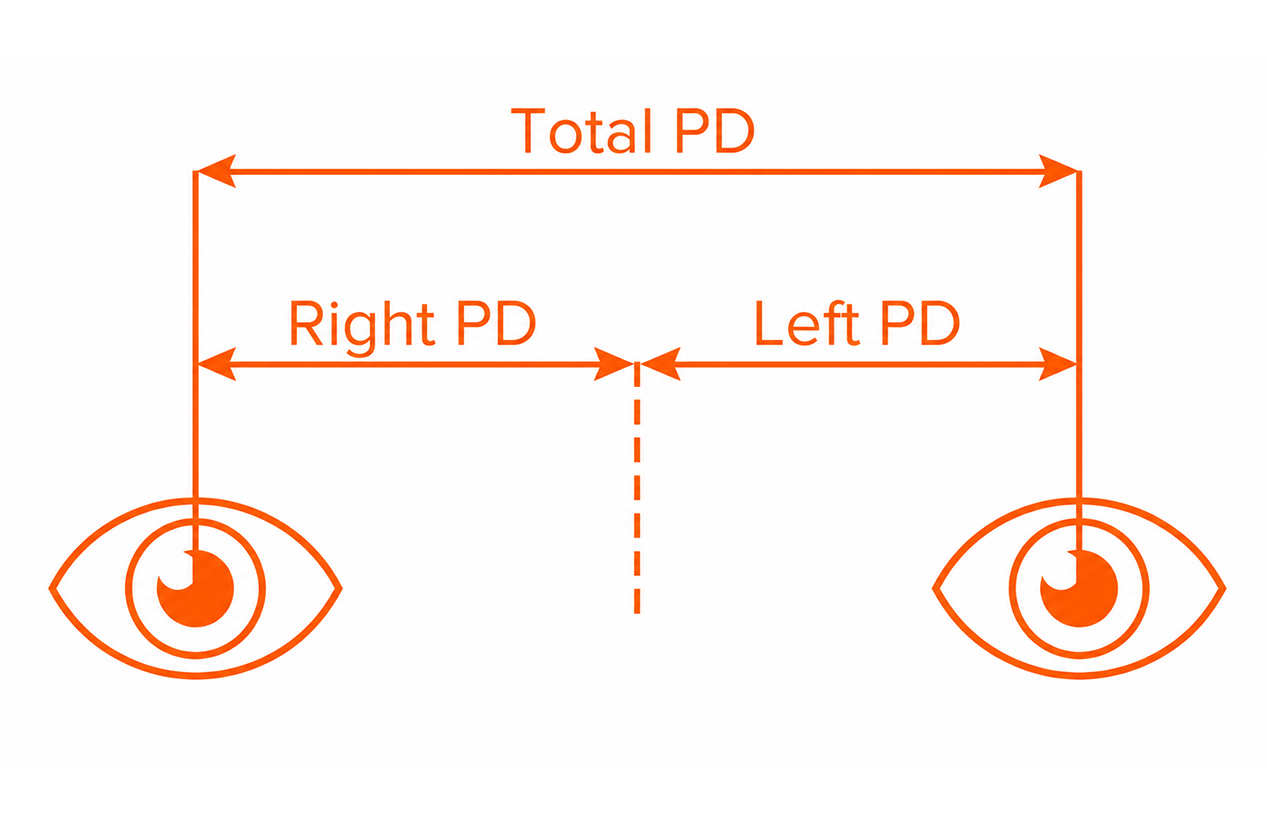
A typical PD may be written as one number or two numbers. One number is called single PD. Two numbers are called dual PD. Both formats are common, but they are used differently when entering prescription details online.
Why PD Matters for Prescription Glasses Online
PD helps align the optical center of each lens with your pupils. The optical center is the part of the lens where the prescription is intended to work most directly with your line of sight.
When you buy prescription glasses online, the frame is not being fitted in person. That makes accurate prescription details more important. PD helps connect your prescription to the frame you choose.
PD can affect:
Where the prescription power sits in each lens
How the lenses line up with your eyes
How naturally the glasses feel during daily use
How the frame and lenses work together
Which PD format you may need to enter online
PD is especially important for prescription eyeglasses because the lens position must match both the prescription and the wearer's eye position. It is one of several details used to make glasses, along with SPH, CYL, Axis, ADD, lens type, and frame measurements. SPH means sphere and describes nearsightedness or farsightedness. CYL means cylinder and relates to astigmatism correction. Axis shows the direction of astigmatism correction. ADD is extra magnifying power used for certain reading, bifocal, or progressive lenses. PD does not replace any of these prescription values; it supports lens placement.
Single PD vs Dual PD: What Is the Difference?
PD can be written in two main ways. The difference matters because some online forms ask for one number, while others ask for right and left values.
The table below explains the basic difference.
PD Type | What It Means | How It May Look | When It Is Useful |
|---|---|---|---|
Single PD | One number measuring the distance between both pupils | 62 mm | Often used for general distance glasses |
Dual PD | Two numbers showing each pupil's distance from the center of the nose | 31/31 mm or 30/32 mm | Useful when right and left eye positions are entered separately |
Distance PD | PD measured for looking far away | One or two numbers | Often used for distance prescription glasses |
Near PD | PD measured for close work, such as reading | Usually about 3-4 mm smaller than distance PD, although the exact difference varies | May be used for reading glasses or some near vision lenses |
Single PD and dual PD describe the same eye spacing in different formats. If you are unsure which format your order form needs, check whether the page asks for one PD value or separate right and left PD values.
Dual PD can be helpful when the eyes are not perfectly equal in distance from the center of the nose. That is normal—many people have slightly different right and left measurements.
Where to Find Your PD Before Ordering Glasses Online
Your PD may be available in several places. It may appear on your eyeglass prescription, in your eye exam record, on a previous glasses order, or in your account details from an earlier purchase.
An eyeglass prescription is the written information from an eye exam that tells how your lenses should correct vision. It often includes values such as OD, OS, SPH, CYL, Axis, and ADD. OD refers to the right eye, while OS refers to the left eye. PD is related to glasses fitting, but it may not always appear automatically on every prescription.
According to the Federal Trade Commission, or FTC, a pupillary distance measurement is needed when buying glasses online or in a store, though most states do not require prescribers to include it on the prescription. If you do not see your PD, you can ask your eye doctor, optometrist, or optical provider whether they have the measurement. An optometrist is an eye care professional who performs eye exams and writes vision prescriptions.
You may also see online instructions for how to measure pupillary distance at home. Home measurements are usually suitable for standard single-vision glasses when the instructions are followed carefully and the number is checked more than once for consistency. They may be less reliable for progressive lenses, children's glasses, complex prescriptions, or high prescriptions. High prescriptions may benefit from professional PD measurement because small alignment differences can become more noticeable as prescription strength increases.
Before ordering glasses online, try these sources:
Your most recent eyeglass prescription
Your eye exam record
A previous online glasses order
Your optical provider or eye care professional
A careful PD measurement method if professional PD is not available
Current and accurate information is always the best starting point.
What to Check Before Entering Your PD
PD is a small number, so it should be entered carefully. Before placing an order, check whether the website asks for single PD or dual PD. If the form asks for one PD number, enter the single PD. If it asks for right and left PD, enter the dual PD values in the correct order.
Check these details before entering PD:
Make sure the number is in millimeters.
Confirm whether the form asks for single PD or dual PD.
Check right and left values if dual PD is used.
Use the PD that matches the type of glasses you are ordering.
Compare the number with your prescription or previous order if available.
Review all prescription values before checkout.
Do not guess if the number looks unclear. If your prescription, order history, and measurement do not match, confirm the details before placing the order.
PD should also match the purpose of the lenses. Distance glasses, reading glasses, and certain multifocal lenses may have different measurement needs. Multifocal lenses are lenses that include more than one vision zone, such as bifocals or progressive lenses.
When to Ask an Eye Care Professional About PD
Most people only need a clear, accurate PD value for ordering glasses. Some situations may benefit from extra help from an eye care professional.
Professional support can be useful when:
You are ordering progressive lenses.
You are ordering bifocal glasses.
You have a prism prescription.
You are buying glasses for a child.
Your PD values look very different across records.
Your prescription has changed and you are unsure which details are current.
You are not sure whether you need distance PD or near PD.
Progressive lenses are multifocal lenses with a gradual change from distance to near vision. Bifocal glasses have two main viewing areas, usually for distance and reading. Prism is a prescription feature used to help with certain eye alignment needs. These lens types can require more precise placement because different parts of the lens serve different viewing needs.
Asking a professional does not make online ordering difficult—it simply helps you enter the right information with more confidence.
Use PD to Order Glasses Online with More Confidence
Pupillary distance is a small measurement with a practical role. It helps place your prescription lenses in line with your eyes and supports a smoother online ordering process. Check whether you need single PD or dual PD, confirm your values before checkout, and ask an eye care professional when your lens type or prescription needs extra precision. With the right PD, choosing prescription glasses online becomes clearer and easier.
FAQs
Q1. Is Pupillary Distance the Same as PD?
Yes. PD is the short form of pupillary distance. You may see either term when entering prescription details online. Both refer to the same eye-spacing measurement used for prescription glasses.
Q2. Can I Use the Same PD for Prescription Sunglasses?
Yes, in many cases, the same distance PD can be used for prescription sunglasses. The key is whether the sunglasses use the same type of distance vision prescription. If the order form asks for different PD details, follow the form or confirm with an eye care professional.
Q3. What If My Single PD and Dual PD Do Not Add Up Exactly?
Small differences can happen because of rounding or measurement method. If the numbers are very different, check the source before entering them online. Use the clearest and most current PD value available.
Q4. Do I Need PD for Non-Prescription Glasses?
Usually, PD is not needed for plain non-prescription fashion glasses. It matters when prescription lenses are being made, including prescription eyeglasses and prescription sunglasses. If lenses include vision correction, PD helps with lens placement.
Q5. Why Is PD Not Always Included?
PD is used mainly for making glasses, not for determining vision correction, so it may not automatically appear on every prescription. Many eye doctors record PD during the fitting process instead of listing it with SPH, CYL, Axis, and ADD. If your PD is missing, ask your eye care provider whether they have the measurement.

