
Learning Center
How to Read an Eye Prescription: SPH, CYL, Axis, and Other Terms Explained


An eye prescription can look like a small code made of letters, numbers, plus signs, and minus signs. Once you know what each term means, the page becomes much easier to read. SPH, CYL, Axis, ADD, OD, OS, and PD all describe different details used to make prescription lenses. Reading them correctly can help you enter your glasses prescription online with more confidence.
What an Eye Prescription Tells You
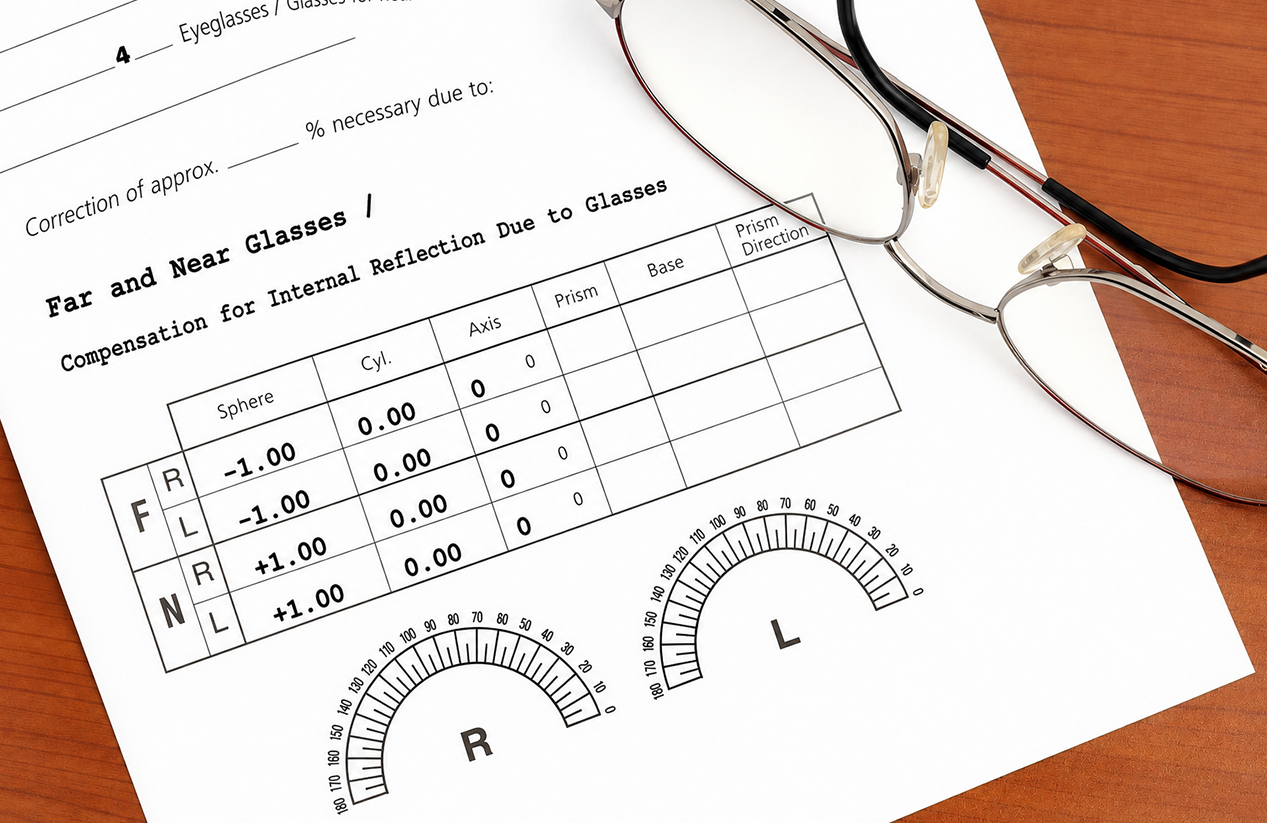
An eye prescription is written information from an eye exam. It describes the lens power needed to correct refractive errors such as myopia, hyperopia, and astigmatism, as well as near-vision changes such as presbyopia. Myopia means nearsightedness, hyperopia means farsightedness, astigmatism means the eye focuses light unevenly, and presbyopia refers to age-related changes in near focus.
An eye prescription is not the same as a full eye health report. A normal eye health examination can show that the eye looks healthy, but it does not always mean your prescription will stay the same. An eyeglass prescription also does not diagnose eye disease.
Your prescription may include numbers for distance vision, reading vision, astigmatism, or eye alignment. It may also include details needed for lens placement, such as PD, which means pupillary distance.
Most glasses prescriptions include some of these terms:
OD for the right eye
OS for the left eye
SPH for sphere power
CYL for cylinder power
Axis for astigmatism direction
ADD for added near vision power
PD for pupillary distance
Prism for certain eye alignment needs
Not every eye prescription has every term. If a section is blank, it may mean that value is not needed for your lenses. If something looks unclear, ask your eye care professional before ordering prescription glasses online.
OD and OS: Right Eye and Left Eye
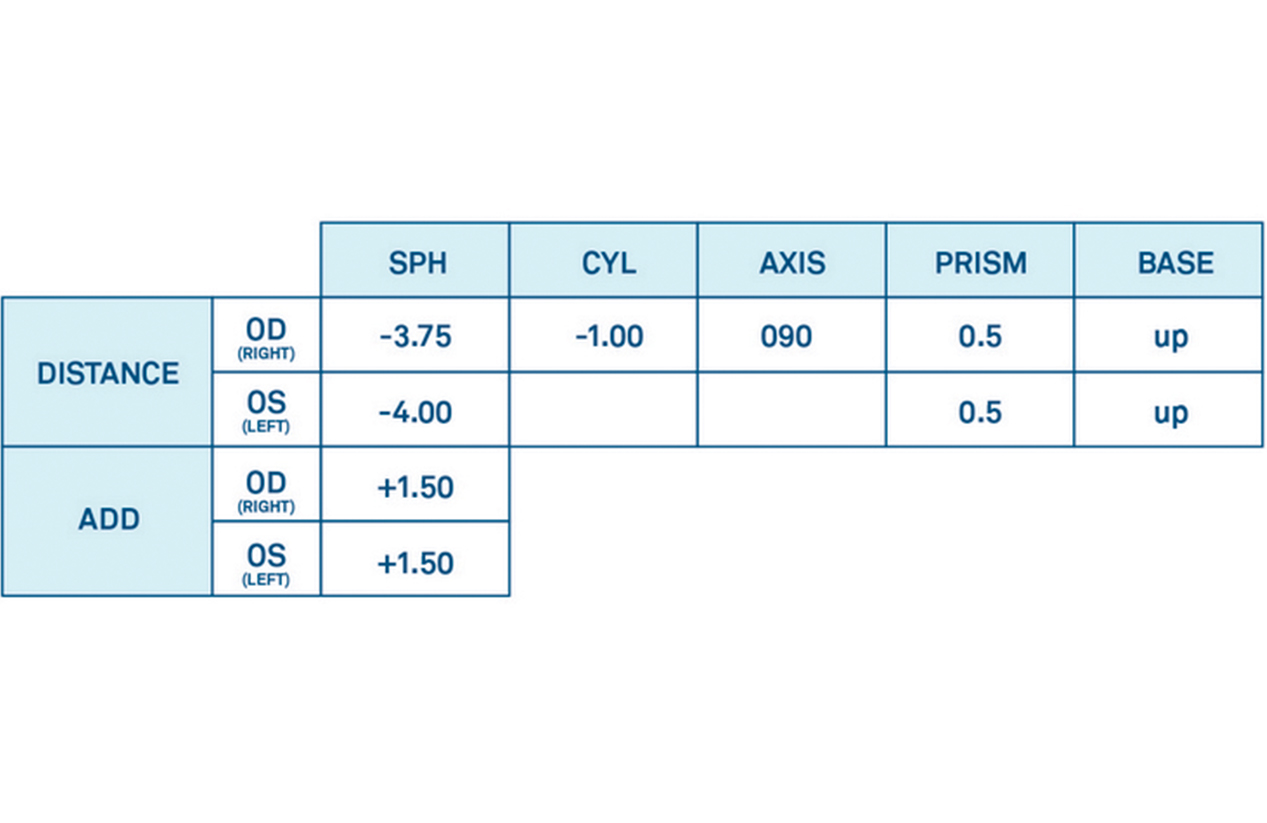
The first thing to check on an eye prescription is which row belongs to each eye. Most prescriptions use OD and OS.
OD stands for oculus dexter, a Latin term for the right eye. OS stands for oculus sinister, a Latin term for the left eye. Latin terms are older medical labels, but they still appear on many prescriptions.
Some prescriptions also use OU, which means both eyes. If both eyes share the same value, OU may appear instead of separate OD and OS entries.
This order matters when entering your glasses prescription online. Right and left eye values are not always the same. Entering them in the correct order helps each lens match the right eye.
Before entering your prescription, check:
OD is entered for the right eye.
OS is entered for the left eye.
Any shared OU value is entered only where the form allows it.
Each number keeps its plus or minus sign.
Blank fields are handled according to the order form.
If your prescription uses RE and LE instead of OD and OS, RE means right eye and LE means left eye. The meaning is the same, but the label is more direct.
SPH Meaning on an Eye Prescription
SPH means sphere. It shows the main lens power needed to correct nearsightedness or farsightedness. Lens power is measured in diopters, a unit used to describe how strongly a lens bends light.
A minus sign in the SPH column usually means nearsightedness. Nearsightedness, also called myopia, means distant objects look less clear. A plus sign usually means farsightedness. Farsightedness, also called hyperopia, means near objects may be harder to focus on, though the experience can vary by person.
Here are simple examples:
SPH Example | What It Usually Means | Basic Reading |
|---|---|---|
-1.50 | Mild nearsighted correction | Distance vision needs help |
-4.00 | Stronger nearsighted correction | More lens power is needed |
+1.25 | Mild farsighted correction | Near focus may need support |
0.00 or Plano | No sphere power | No SPH correction is needed |
The table gives a simple way to read SPH values. The number shows lens power, while the sign shows the general correction direction. The farther the number is from zero, the stronger the lens power. For example, -4.00 is stronger than -1.00, and +3.00 is stronger than +1.00.
Keep the sign exactly as written. A plus sign and a minus sign change the meaning of the prescription.
CYL and Axis: Astigmatism Numbers Explained
CYL means cylinder. It shows lens power used to correct astigmatism. Astigmatism is a common vision condition related to how the eye focuses light when the front surface of the eye is not evenly curved.
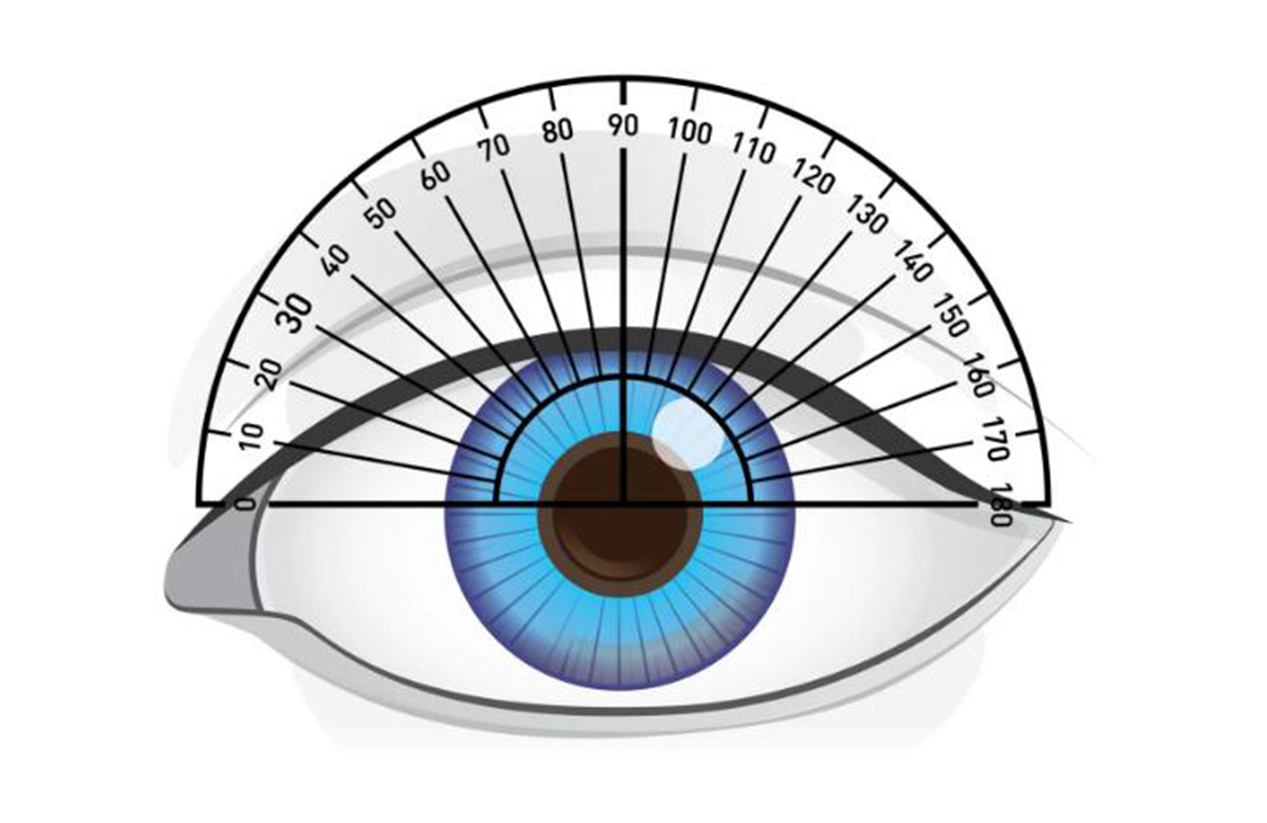
If your prescription has a CYL value, it usually also has an Axis value. Axis shows the direction of astigmatism correction. It is written as a number from 1 to 180 degrees.
CYL and Axis work together. CYL tells how much astigmatism correction is needed. Axis tells where that correction should be placed in the lens.
Here is a simple way to compare them.
Term | What It Means | How It Looks | Why It Matters |
|---|---|---|---|
CYL | Cylinder power for astigmatism | -0.75 or +1.25 | Shows the amount of astigmatism correction |
Axis | Direction of astigmatism correction | 10, 90, or 180 | Shows where the CYL correction is positioned |
Blank CYL | No cylinder value listed | Empty field | May mean no astigmatism correction is needed |
Blank Axis | No axis value listed | Empty field | Usually only acceptable when CYL is also blank |
If CYL has a number but Axis is blank, confirm the prescription before ordering glasses. Axis is usually needed when cylinder power is present.
Do not change plus or minus signs in the CYL column. Some prescriptions use minus-cylinder format, while others use plus-cylinder format. Both can be valid, but they should be entered exactly as written unless an eye care professional converts them.
ADD, PD, and Other Prescription Terms
Some eye prescriptions include extra terms beyond SPH, CYL, and Axis. These details can matter when ordering reading glasses, progressive lenses, bifocal glasses, or prescription glasses online.
ADD means additional power for near vision. It is often used for reading, bifocal, or progressive lenses. Bifocal lenses have two main viewing areas, usually distance and near. Progressive lenses are multifocal lenses with a gradual change from distance to near vision. ADD is usually written as a positive number, such as +1.50 or +2.00. It is not the same as SPH; it is added on top of it for near vision needs.
PD means pupillary distance. It measures the distance between the centers of your pupils, usually in millimeters. PD helps position prescription lenses correctly in the frame.
Prism is a prescription feature used for certain eye alignment needs. If your prescription includes prism, it may also include a direction such as base up, base down, base in, or base out. Do not guess prism values. Enter them exactly as written or ask your eye care professional for help.
You may also see these terms:
DV means distance vision.
NV means near vision.
Plano means no lens power in that section.
Balance may appear when one lens is made to match the appearance of the other lens.
Expiration date shows how long the prescription is considered current for ordering glasses.
An eye prescription can look busy, but each term has a specific purpose. Focus on one row and one column at a time.
How to Check Your Prescription Before Buying Glasses Online
Before ordering prescription glasses online, review your eye prescription carefully. Small typing errors can change the meaning of the lens values.
Start with the basics. Confirm that OD and OS are entered in the correct places. Then check SPH, CYL, Axis, ADD, and PD.
Use this checklist before checkout:
Enter OD for the right eye and OS for the left eye.
Keep every plus sign and minus sign exactly as written.
Check that CYL and Axis are entered together when CYL has a value.
Leave blank fields blank only if the order form allows it.
Enter ADD only if you are ordering lenses that require it.
Enter PD in the correct format, such as single PD or dual PD.
Use a current prescription that is still valid.
Confirm any unclear handwriting or symbols before ordering.
If your prescription is digital, zoom in before typing. If it is handwritten, check each number carefully. A 0, 6, 8, or 9 can be easy to misread on some forms.
Some order forms ask you to choose lens type before entering all values. Make sure the lens type matches your needs. Single vision, reading, progressive, and bifocal lenses may use prescription details differently.
In the United States, the Federal Trade Commission, or FTC, says consumers have the right to get a copy of their eyeglass prescription after an eye exam. Having your own copy makes it easier to compare styles, prices, and lens options in person or online.
When to Ask an Eye Care Professional
Some prescription questions are easy to answer with a quick check. Others need professional help. An eye care professional may be an optometrist or ophthalmologist. An optometrist performs eye exams and writes vision prescriptions. An ophthalmologist is a medical doctor who can diagnose and treat eye diseases and may also write prescriptions.
Ask for help when:
You cannot tell whether a number has a plus or minus sign.
CYL has a value but Axis is missing.
Your OD and OS values seem reversed.
Your prescription includes prism.
You are ordering progressive or bifocal lenses for the first time.
Your prescription is expired.
Your vision needs have changed since your last exam.
The online form does not match your prescription layout.
Professional help can also be useful for children's glasses. Children's prescriptions and measurements can change as they grow, so current information matters.
Use Your Eye Prescription with More Confidence
Your eye prescription becomes easier to use when each term has a clear role. OD and OS tell which eye the numbers belong to. SPH shows main lens power. CYL and Axis work together for astigmatism. ADD, PD, and Prism add extra details when needed. Check each value before ordering, keep signs exactly as written, and use your prescription to choose prescription glasses online with more confidence.
FAQs
Q1. What Does SPH Mean on an Eye Prescription?
SPH means sphere, the main lens power used to correct nearsightedness or farsightedness. A minus sign usually points to nearsighted correction, while a plus sign usually points to farsighted correction. The farther the number is from zero, the stronger the lens power.
Q2. Do CYL and Axis Always Appear Together?
CYL and Axis usually appear together when astigmatism correction is needed. CYL shows the amount of correction, while Axis shows the direction. If CYL has a number but Axis is missing, confirm the prescription before ordering glasses.
Q3. What Is the Difference Between OD and OS?
OD means right eye, and OS means left eye. These labels help keep each eye's prescription values in the correct place. When buying prescription glasses online, enter each row carefully because the two eyes may have different values.
Q4. Can I Buy Prescription Glasses Online with My Eye Prescription?
Yes, you can buy prescription glasses online with a current eyeglass prescription. You need to enter the values exactly as written, including SPH, CYL, Axis, ADD if needed, and PD. If any term is unclear, ask your eye care professional before placing the order.

