Lenses Guides
Types of Eyeglass Lenses: Common Lens Choices and How They Work


What Are the 11 Different Types of Eyeglass Lenses and Their Functions?
The frame gets attention first, but the lenses decide how your glasses work. The types of eyeglass lenses you select can affect clear vision, screen comfort, outdoor use, lens thickness, and daily wear. Some lenses correct vision. Some add comfort features. Others help with sunlight or strong prescriptions. Knowing the main lens choices makes online glasses ordering much easier.
Quick Answer
Eyeglass lenses are designed for different vision needs, daily activities, and comfort preferences. The main types include:
Single vision lenses: Designed for one main viewing distance, such as far away, reading, or computer use.
Progressive and bifocal lenses: Made for people who need more than one viewing distance in the same pair.
Blue light lenses: An option for people who spend long hours using digital devices.
Photochromic and polarized lenses: Designed for changing light conditions and outdoor glare.
High index lenses: Help create thinner-looking lenses for certain stronger prescriptions.
Non-prescription lenses: Used for style or lens features without vision correction.
The right eyeglass lenses depend on your prescription, lifestyle, frame choice, and how you use your glasses every day.
Clear Single Vision Lenses for Everyday Vision
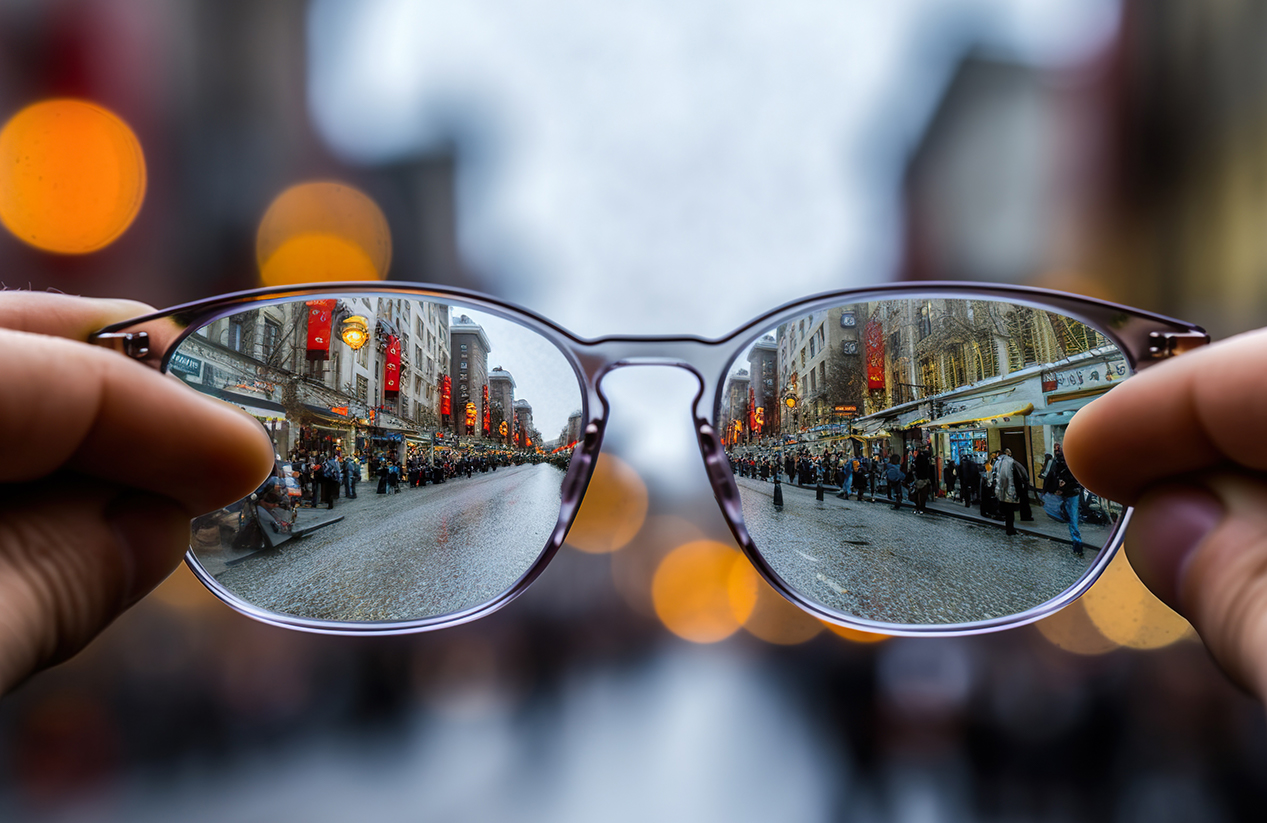
Single vision lenses are prescription lenses made for one main viewing distance. They may be used for distance vision, reading vision, or computer-distance vision, depending on the prescription.
Clear single vision lenses are one of the most common choices for everyday glasses. They are often used when the prescription needs one main correction across the lens.
For example, distance single vision lenses may help with driving, walking, classroom use, watching TV, or seeing signs. Reading single vision lenses may help with books, labels, menus, or close-up tasks. Computer single vision lenses may be made for an intermediate distance, which means a range between near reading and far distance.
Single vision lenses are often a practical choice when:
One main viewing distance matters most
The prescription does not need multiple lens zones
The wearer wants simple daily prescription glasses
The frame is used for work, school, errands, or regular wear
Clear lenses can also pair with other lens options, such as anti-reflective coating or blue light filtering, when available. The main point is that single vision refers to the prescription design, while coatings and features can support how the lenses feel in daily use.

Reading, Bifocal, and Progressive Lenses for Near and Multifocal Needs
Some types of eyeglass lenses are made for near vision or for more than one viewing distance. These options are often considered when reading, computer work, and distance viewing need different lens support.
The table below compares these common prescription lens designs.
Lens Type | Main Purpose | Common Use | What to Know |
|---|---|---|---|
Close-up vision | Books, menus, labels, phone use | Made for near tasks | |
Distance and near vision | Daily wear with two viewing zones | Often has a visible line | |
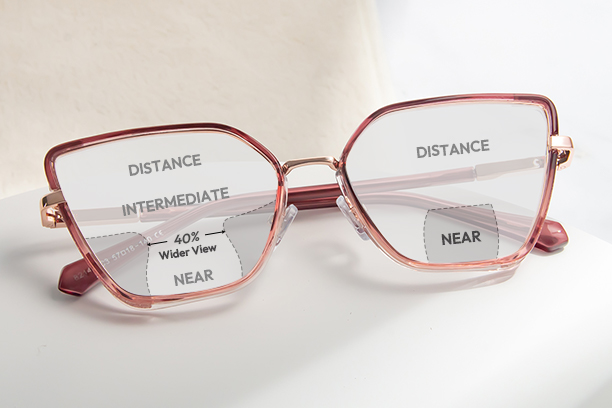
Distance, intermediate, and near vision | Daily wear across multiple distances | No visible line, gradual power change |
These lens designs solve different needs. Reading lenses focus on near tasks, while bifocal and progressive lenses support more than one viewing distance.
Progressive lenses may be useful for people who switch between far, screen, and close-up viewing during the day. Bifocal lenses may suit people who prefer two clear viewing zones. Reading lenses work best when close-up vision is the main need.

Blue Light Lenses for Screen Use
Blue light lenses are lenses designed to filter part of the blue-violet light range. Blue light is visible light that comes from sunlight, digital screens, LED lights, and other common light sources.
Many people consider blue light lenses for screen-heavy routines, such as office work, online classes, gaming, reading on a tablet, or long phone use. Some users prefer them because they can make screen viewing feel softer or less harsh.
Blue light lenses should be described carefully. They are not a guaranteed solution for tired eyes, sleep problems, or medical eye concerns. Screen comfort can also depend on lighting, glare, blinking, screen distance, dry air, and prescription accuracy.
Blue light lenses may be worth comparing if:
You spend long hours on screens
Bright white screens feel harsh
You want screen-use features in prescription glasses
You prefer a softer lens feel for indoor use
You want one pair for work, study, and casual device time
For many users, blue light lenses are best treated as a comfort-focused lens option. They can support a screen routine, but they work best with regular breaks, balanced lighting, and an up-to-date prescription.

Photochromic and Polarized Lenses for Outdoor Light
Outdoor light creates different needs from indoor screen use. Two common options are photochromic lenses and polarized lenses.
Photochromic lenses are lenses that darken in response to sunlight and become clearer in lower light. They can be practical for people who move between indoor and outdoor spaces during the day.
Polarized lenses are lenses designed to reduce certain types of reflected glare. Glare can come from roads, water, snow, car surfaces, and other bright reflective areas. Polarized lenses are often used in sunglasses or prescription sunglasses.
These lens options are different from each other. Photochromic lenses respond to changing light. Polarized lenses focus more on reflected glare.
For outdoor glasses, UV protection also matters. UV means ultraviolet light, an invisible type of light from the sun. For sunglasses or prescription sunglasses, look for lens information such as UV400 or 100% UV protection when available.
Photochromic and polarized lenses may be useful for:
Walking outdoors
Driving in daylight
Travel and errands
Outdoor dining
Weekend activities
Prescription sunglasses
People who move between indoor and outdoor spaces
Lens choice should match the activity. A daily indoor pair may not need outdoor lens features, while sunglasses or outdoor glasses should be chosen with sunlight, glare, and prescription needs in mind.
High Index Lenses for Thinner-Looking Glasses
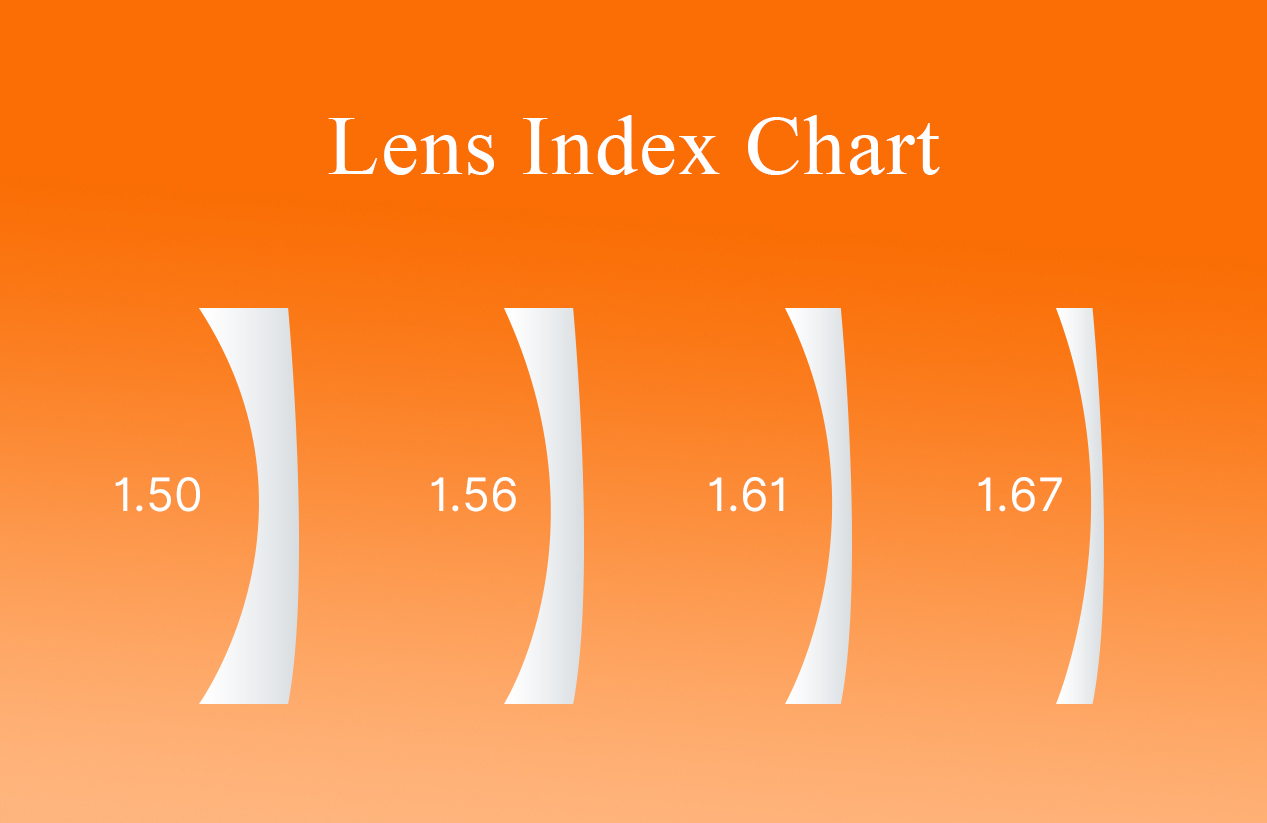
High index lenses are lenses made from materials that bend light more efficiently than standard lens materials. This can help create thinner-looking lenses for certain prescriptions.
Lens index means how strongly a lens material bends light. A higher lens index can often reduce lens thickness, especially for stronger prescriptions.
High index lenses are usually considered when lens thickness is a concern. Lens thickness can be affected by prescription strength, frame size, lens shape, and lens material.
For minus prescriptions, lenses are usually thicker at the edges. For plus prescriptions, lenses are usually thicker in the center. A higher index may help reduce that thickness, but it is not always necessary for every prescription.
High index lenses may be helpful when:
The prescription is stronger
Lens edges look thick in larger frames
A slimmer lens profile is preferred
The wearer wants thinner-looking prescription glasses
Frame shape makes lens thickness more noticeable
A higher index is not automatically better for every pair. Mild prescriptions may already look clean with standard or mid-index lenses. Stronger prescriptions may benefit more from high index options.
The best result usually comes from matching lens index with the prescription and frame size.
Non-Prescription Lenses for Style and Daily Wear
Non-prescription lenses, also called plano lenses, are lenses without vision correction. They do not change how clearly you see, but they can be used for style, frame-only wear, or certain lens features.
Plano lenses may be used when someone likes the look of glasses but does not need prescription correction. They may also be used with clear lenses, blue light filtering, or sunglass-style options when available.
Non-prescription lenses are different from prescription lenses because they do not use SPH, CYL, Axis, or ADD values for vision correction. Still, frame fit and lens comfort matter. A non-prescription pair should sit well, feel comfortable, and match daily use.
Plano lenses may fit users who want:
Fashion glasses
Clear everyday frames
Non-prescription blue light glasses
Sunglasses without vision correction
A frame-only style with lenses added
For online buying, make sure the order type matches your need. If you require vision correction, choose prescription lenses. If you only want style or a non-prescription lens feature, plano lenses may be the right category.
How to Compare Eyeglass Lens Choices Online
Different types of eyeglass lenses are easier to compare when you start with your real use case. Do you need clear distance vision, reading support, screen comfort, outdoor light control, thinner lenses, or non-prescription style?
Before ordering eyeglass lenses online, check:
Prescription need: Decide whether you need prescription or non-prescription lenses.
Lens design: Select single vision, reading, bifocal, or progressive lenses if needed.
Screen use: Consider blue light lenses for screen-heavy routines.
Outdoor use: Compare photochromic, polarized, or prescription sunglasses options.
Lens thickness: Check whether high index lenses make sense for your prescription.
Frame size: Larger frames can affect lens thickness and weight.
PD: Use the correct pupillary distance for prescription lenses.
Coatings: Consider anti-reflective coating if glare or reflections bother you.
Daily comfort: Think about weight, fit, and how long you will wear the glasses.
Order details: Review prescription values, lens options, production time, and shipping before checkout.
The best lens choice is not always the most advanced option. It is the option that matches your prescription, frame, daily routine, and comfort needs.
Match Your Lenses to Your Prescription and Routine
The right eyeglass lenses should fit how you see, work, read, drive, and spend time outdoors. Start with your prescription needs, then compare lens design, screen-use features, outdoor options, thickness, and frame fit. A clear lens decision can make your glasses feel more useful from the first day you wear them.
FAQs
Q1. What Are the Main Types of Eyeglass Lenses?
The main types of eyeglass lenses include single vision, reading, bifocal, progressive, high index, blue light, photochromic, polarized, and non-prescription lenses. Some are prescription lens designs, while others are lens features or material choices. The right option depends on your vision needs and daily routine.
Q2. Which Eyeglass Lenses Are Best for Daily Use?
The best eyeglass lenses for daily use depend on your prescription and how you spend your day. Single vision lenses may work well for one main distance, while progressive lenses may help if you need multiple viewing ranges. For screens or outdoor use, lens features can be added when available.
Q3. Can Different Lens Features Be Combined?
Yes, some lens features can often be combined, depending on the frame, prescription, and lens options. For example, prescription lenses may also include blue light filtering or anti-reflective coating. Availability can vary, so review the lens choices before checkout.
Q4. How Do I Know Which Eyeglass Lenses to Order Online?
Start with your current glasses prescription, then decide how you will use the glasses most often. Check whether you need single vision, progressive, reading, outdoor, screen-use, or non-prescription lenses. Review PD, frame size, lens thickness, and available lens features before placing the order.