Eyeglasses Guides
Acetate vs Metal Glasses Frames: How Material Changes Weight, Color, and Fit


Frame material can significantly change how glasses feel before you even notice their shape. Acetate glasses often feel bold, smooth, and color-rich, while metal glasses can feel lighter, slimmer, and more adjustable. The best choice ultimately depends on weight, nose fit, color preference, prescription needs, and how long you wear your glasses each day.
Acetate vs Metal Glasses Frames: What Is the Difference?
Acetate and metal are the two most common materials for glasses frames. Acetate typically gives frames a bolder look and richer color. Metal usually gives frames a slimmer, lighter-looking shape with adjustable nose pads.
Feature | Acetate Glasses | Metal Glasses |
|---|---|---|
Look | Bolder and more noticeable | Slimmer and more minimal |
Color | Rich colors, clear styles, tortoise shell, or patterns | Gold, silver, black, rose, gunmetal, or other solid finishes |
Nose Fit | Often has a built-in bridge | Often has adjustable nose pads |
Frame Feel | More substantial on the face | Lighter-looking and thinner |
Best For | Statement frames, color-focused styles, smooth bridge designs | Classic styles, adjustable fit, cleaner frame lines |
Online Check | Bridge width and frame size | Nose pads, temple fit, and frame width |
Neither material is universally better. The ideal choice depends on your fit, personal style, prescription lenses, and daily wear habits.

How Titanium Glasses Fit Into Metal Frames
Titanium glasses are a specialized type of metal glasses. Titanium is widely known as a strong, lightweight, and corrosion-resistant metal. The U.S. Geological Survey describes titanium as a highly durable silver-gray metal with exceptional corrosion resistance.
In eyewear, titanium is often used for people who want a light frame with a refined look. It works exceptionally well for thin metal styles, rimless-inspired designs, and minimalist frames.
Titanium glasses are not the same as every metal frame. Some metal glasses use stainless steel, alloy blends, or other standard metals. Titanium is highly valued because it feels extremely light while still providing robust support for daily wear.
Titanium glasses may be worth comparing if you want:
A lightweight metal frame
A slim and clean look
A corrosion-resistant material
A frame that feels less bulky on your face
A refined everyday style
That said, titanium is not the only good metal choice. Stainless steel and other mixed-metal frames can also be practical, stylish, and comfortable, depending entirely on the frame design.
How Frame Material Affects Weight and Comfort
Frame material drastically affects comfort, but it does not work alone. Overall weight, size, bridge design, nose pads, temple length, and lens thickness all matter.
Weight and Balance
Acetate glasses often feel more substantial because the frame front is usually thicker. However, this does not automatically mean they feel heavy. A well-sized acetate frame can feel perfectly balanced, especially when the bridge fits your nose contour well.
Metal glasses often look lighter and utilize thinner components. A slim metal frame can feel incredibly easy for long wear, especially when the nose pads are appropriately adjusted.
Titanium glasses sit comfortably in the lightweight metal category. They are ideal for people who prefer thin frames and want minimal frame presence on their face.
The most important question is not only "Which material is lightest?" A better question is: Does the frame feel balanced on your face?

Nose Fit and Adjustability
Acetate glasses usually feature a built-in bridge. This means the bridge shape is permanently molded into the frame front. If the bridge fits well, the frame can feel smooth and steady. If the bridge is not the right match, the frame may sit too low or feel less secure.
Metal glasses almost always feature adjustable nose pads. This can make the fit much easier to fine-tune, especially if you need the frame to sit higher, lower, closer, or farther from your face.
For successful online shopping, carefully compare:
Bridge width
Frame width
Lens height
Temple length
Nose pad design
Frame weight (if listed)
Lens type and exact prescription needs
A frame material can feel very different depending on the specific size and shape of the glasses. A large acetate frame and a small acetate frame will not feel the same. Likewise, a thin metal frame and a thick metal frame will feel completely different.
How Material Changes Color, Finish, and Style
Material has a massive effect on how a frame's color actually looks in person.
Acetate is frequently chosen for its incredible color depth. It can showcase clear, translucent, tortoise shell, marble, striped, or intricately layered effects. The same brown, black, or green can look much richer in acetate because the material can hold deep color entirely through the frame.
Metal glasses usually feature a completely different kind of finish. They may look polished, brushed, matte, shiny, gold, silver, black, rose, or gunmetal. Metal frames often feel much more subtle because the frame lines are considerably thinner.
Plastic glasses can vary wildly. Some plastic glasses are premium acetate, while others may use standard injection-molded plastic materials. That is exactly why "plastic glasses" is a broad term. If you care deeply about color depth, flexibility, or premium finish, check the exact product material instead of assuming all plastic frames are identical.
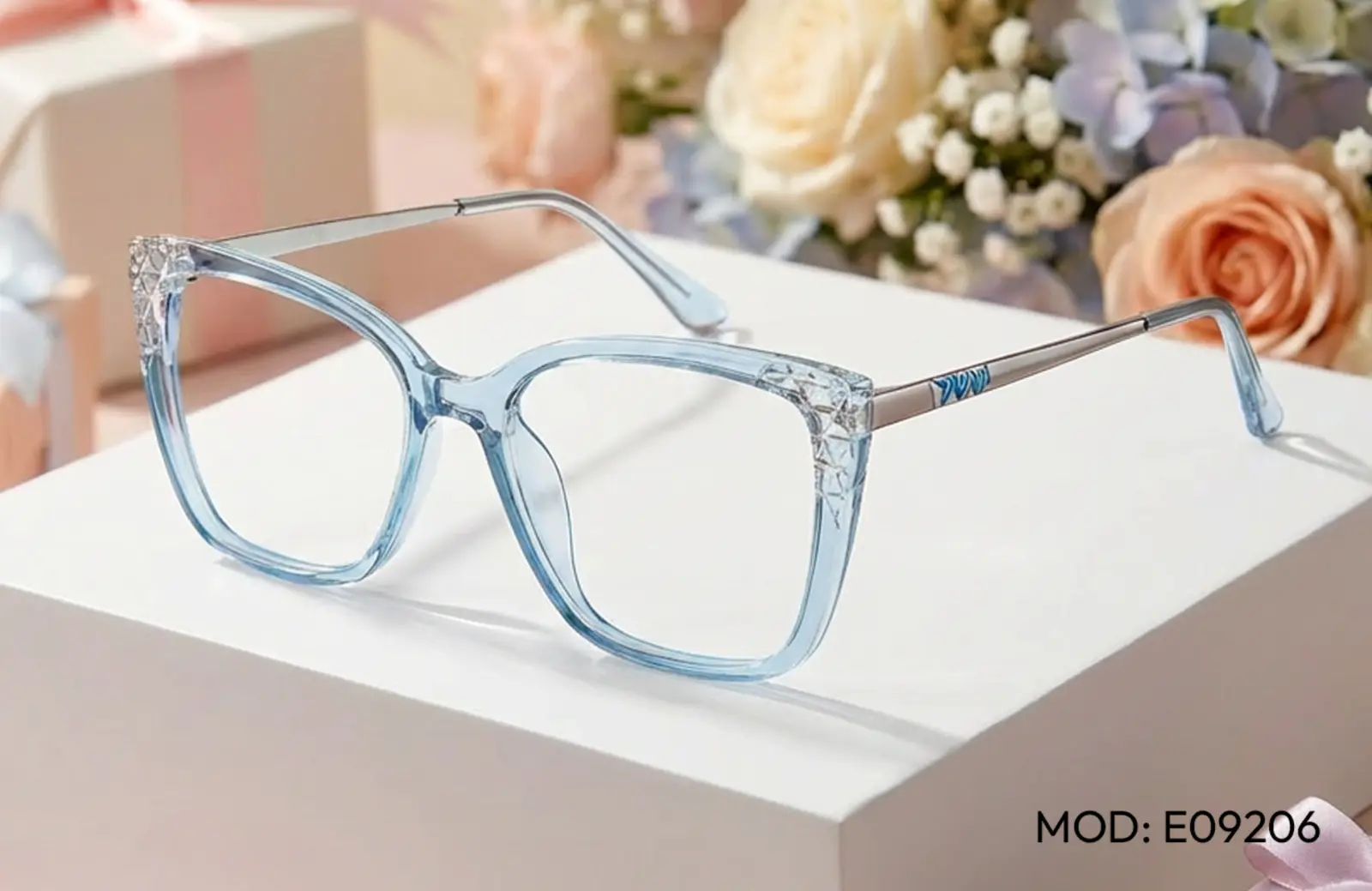
Mixed-material frames can offer a perfect middle ground. For example, a frame may use a bold acetate front paired with slim metal temples. This provides color and structure in the front while keeping the side profile elegant and slim.
Use material carefully to support your personal style goals:
Choose acetate for bold colors, vivid patterns, and a stronger frame presence.
Choose metal for thin lines, lighter visual weight, and customizable adjustable nose pads.
Choose titanium for a premium, slim, and ultra-lightweight metal look.
Choose mixed materials when you want distinct contrast between the frame front and the temples.
Choose plastic glasses strictly based on the listed material, not just the broad category label.
Style is highly personal, but the chosen material can make the exact same shape feel entirely different.

What to Check Before Choosing Frame Material Online
Choosing your frame material online is much easier when you prioritize fit and daily use first. Color and shape absolutely matter, but they must work harmoniously with physical comfort.
Before buying, always check these critical details:
Material: Look precisely for acetate, metal, titanium, plastic, or mixed material labels.
Frame measurements: Check lens width, bridge width, and temple length.
Bridge design: Built-in bridges and adjustable nose pads feel completely different on the nose.
Nose pads: Adjustable nose pads can quickly help fine-tune a metal frame's fit.
Frame weight: Use it as a helpful reference point if the product page lists it.
Lens thickness: Stronger prescriptions may look vastly different depending on whether the rims are thin or thick.
Daily use: Actively think about work, driving, reading, screen time, and long-wear comfort.
Color finish: Remember that acetate and metal show color in fundamentally different ways.
Frame shape: Square, round, rectangle, cat-eye, and oval frames can all feel different depending strictly on the material used.
Virtual try-on: Use this feature when available to confidently compare style and facial balance.
If you already own glasses that fit perfectly, check the numbers printed inside the temple arm or on the bridge. Then, compare those precise measurements with the new frame. This strategy helps you choose prescription glasses online with a much more familiar, reliable fit.
Do not choose your material based on trend alone. A frame you wear often should feel consistently good after a full day, not just look good in the mirror for a few minutes.
Acetate vs Metal Glasses Frames: Which Should You Choose?
The ultimate choice depends entirely on what matters most to you. The table below gives a simple, side-by-side view to help you decide.
Need | Acetate Glasses | Metal Glasses |
|---|---|---|
Bold color | Often stronger and richer | Usually more subtle and metallic |
Pattern options | Excellent for tortoise shell, clear, marble, and layered colors | More limited, usually restricted to solid finishes |
Visual weight | More noticeable and prominent | Slimmer and significantly lighter-looking |
Nose fit | Usually a built-in, fixed bridge | Often features customizable adjustable nose pads |
Long-wear comfort | Excellent when the fixed bridge and overall size fit well | Excellent when the nose pads and temples are properly adjusted |
Minimal style | Possible, but often more visually present | Often a highly natural, seamless fit |
Strong style statement | Often a very strong, bold choice | Usually more understated and classic |
Prescription appearance | Thicker rims may help beautifully frame the lens edge | Thin rims may show more lens edge, heavily depending on prescription strength |
Both material options can work exceptionally well. The absolute right material is the one that perfectly fits your face, securely holds your lenses, and comfortably suits your daily use.
Conclusion
A genuinely good frame starts with the exact way you wear your glasses. Carefully compare acetate glasses, metal glasses, titanium glasses, plastic glasses, and mixed-material frames strictly by weight, bridge fit, color, nose support, and your specific lens needs. Take the time to explore glasses made from different materials with your daily routine firmly in mind, and then confidently choose the pair that feels comfortable, highly useful, and perfectly natural every time you put it on.
FAQs about Acetate and Metal Glasses
Q1. Are Acetate Glasses the Same as Plastic Glasses?
Not always. Acetate is a premium type of plastic-based frame material, but the broad term "plastic glasses" can refer to several different materials. If you want high-quality acetate specifically, always check the detailed product material listed on the frame page.
Q2. Are Metal Glasses Lighter Than Acetate Glasses?
Metal glasses often look and feel lighter because they typically use significantly thinner rims and temples. However, the total frame size, lens thickness, and nose pad fit heavily affect overall comfort. A precisely balanced acetate frame can still feel incredibly comfortable for all-day wear.
Q3. Are Titanium Glasses Better Than Regular Metal Glasses?
Titanium glasses can be a phenomenal choice if you specifically want an ultra-lightweight, highly corrosion-resistant metal frame. Standard regular metal glasses can also be incredibly stylish, practical, and highly comfortable. The better choice depends heavily on your fit requirements, budget, style preferences, and how long you intend to wear your glasses each day.
Q4. Which Frame Material Is Best for Strong Prescriptions?
There is no single best material for every strong prescription. Smaller frame shapes, appropriate lens index, rim thickness, and exact lens placement can all heavily affect the final look. If noticeable lens thickness is a primary concern, be sure to compare both the frame material and the overall frame size carefully before ordering.