
Learning Center
Parts of Glasses Explained: Frame, Bridge, Temples, Hinges, and Nose Pads


Glasses feel most comfortable when all their small details work seamlessly together. Every component of your eyeglasses, from the bridge to the temples, affects how the frames sit, stay in place, and feel after hours of continuous wear. Understanding these structural parts makes it much easier to compare glasses frames online, especially when precise fit, nose comfort, and overall frame stability matter.
Quick Takeaways
The primary parts of glasses include the frame front, rims, bridge, temples, hinges, temple tips, nose pads, and lenses. Each component plays a distinct role in how the glasses look, fit, and feel throughout the day.
Frame front: Holds the lenses and establishes the primary aesthetic of the glasses.
Rims: Surround the lenses and provide structural support to keep them securely in place.
Bridge: Sits directly over the nose and dictates frame height and resting comfort.
Temples: Extend toward the ears to keep the glasses steady and aligned.
Hinges: Connect the frame front to the temples, allowing them to open and fold.
Temple tips: Rest comfortably behind the ears to support long-term wear and grip.
Nose pads: Support the frame on the bridge of the nose and allow for fit adjustments.
Lenses: Provide the necessary vision correction, light control, or eye protection.
When shopping for eyewear online, evaluating the bridge, temples, nose pads, and overall frame measurements is highly recommended. Paying attention to these intricate details helps you choose a glasses frame that genuinely feels as good as it looks.
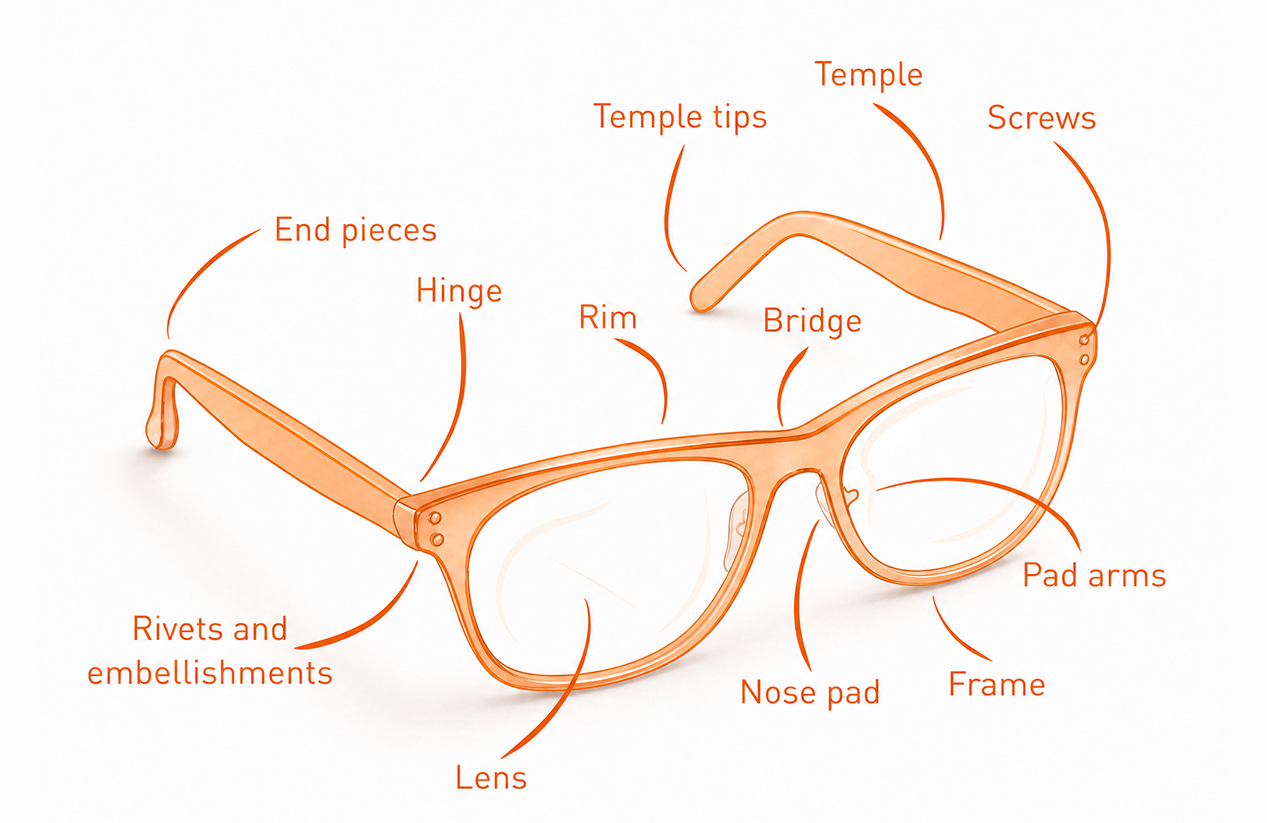
Main Parts of Glasses at a Glance
Before diving into fit details, it helps to familiarize yourself with the basic terminology. These terms frequently appear when comparing frame sizes, bridge widths, and different optical styles online.
Part of Glasses | What It Is | Why It Matters |
|---|---|---|
Frame Front | The front section of the frame that houses the lenses. | Determines lens shape, frame style, and overall facial proportion. |
Rims | The direct edges encasing the lenses. | Secure the lenses and heavily influence the frame's visual weight. |
Bridge | The center piece connecting the two lenses over the nose. | Dictates nasal fit, frame height, and visual balance. |
Temples | The side arms extending from the frame front to the ears. | Anchor the glasses to the sides of the head. |
Hinges | The small mechanical joints connecting temples to the frame front. | Provide flexibility and allow the glasses to fold cleanly. |
Temple Tips | The curved ends of the temples resting behind the ears. | Prevent slipping and ensure comfort during extended wear. |
Nose Pads | Small cushions resting directly on the sides of the nose. | Distribute frame weight evenly and prevent pinching. |
Lenses | The clear or tinted optical material placed within the rims. | Essential for vision correction and UV or blue light protection. |
These components must operate in harmony. While a frame might look spectacular in a photograph, the specific design of the bridge, temples, and nose area ultimately dictates how practical and comfortable the eyewear is in real-world scenarios.
How the Frame Front, Rims, and Bridge Hold the Lenses
The front architecture of the glasses establishes the frame’s shape, stylistic flair, and precise lens position. These features also govern how seamlessly the glasses conform to the natural contours of your face.
Frame Front and Rims
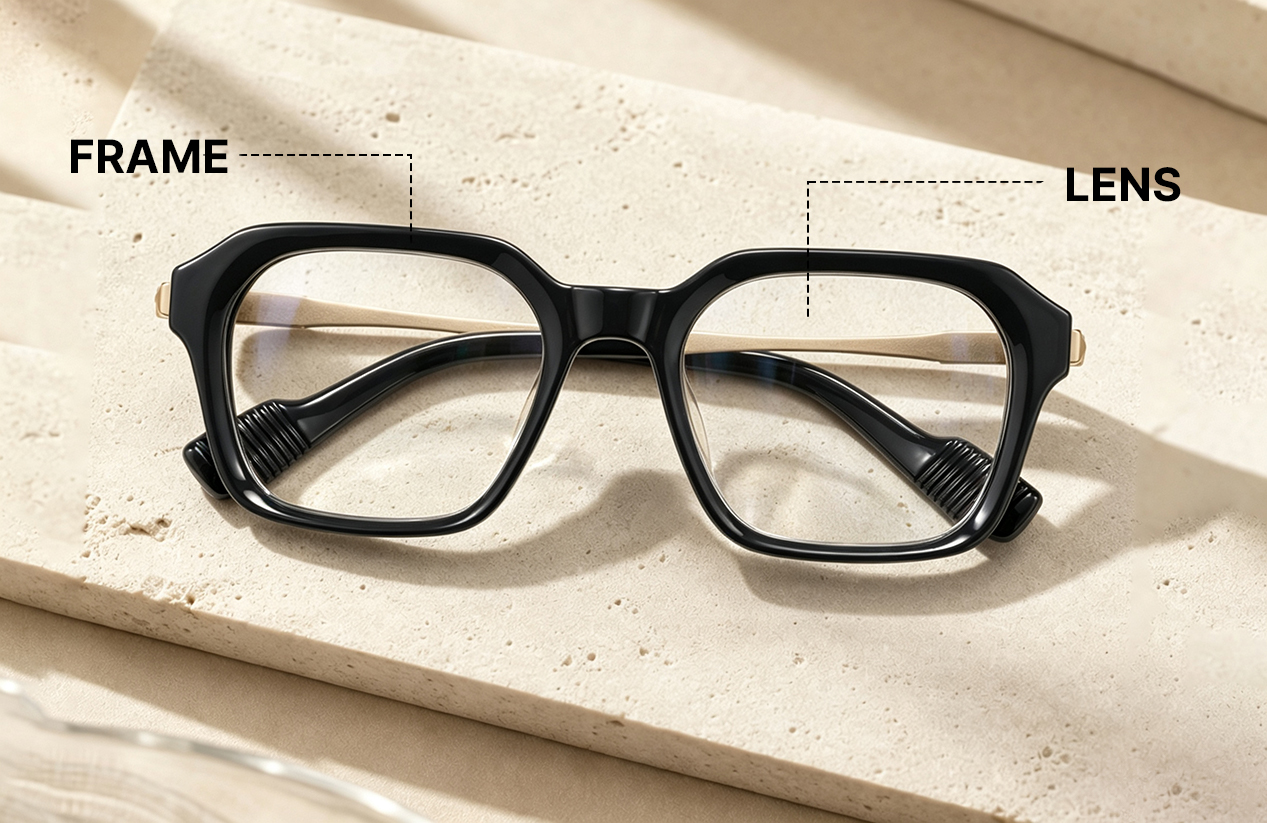
The frame front is typically the most prominent design element. It encompasses the area immediately surrounding the lenses and the central bridge. The frame front defines your optical style and heavily influences how the glasses rest across your face.
Rims are the structural borders that encapsulate the lenses. In full-rim frames, the rims completely encircle the optical lenses. In semi-rimless designs, they only partially secure the lenses, usually along the top edge. In rimless eyewear, the lenses attach directly to the central bridge and temples, creating a minimalist aesthetic with virtually no surrounding border.
Furthermore, rims dictate the boldness of the glasses. A thicker rim creates a striking, dominant look, whereas a thinner wire rim feels notably lighter and much more subtle on the face.
Bridge and Bridge Width
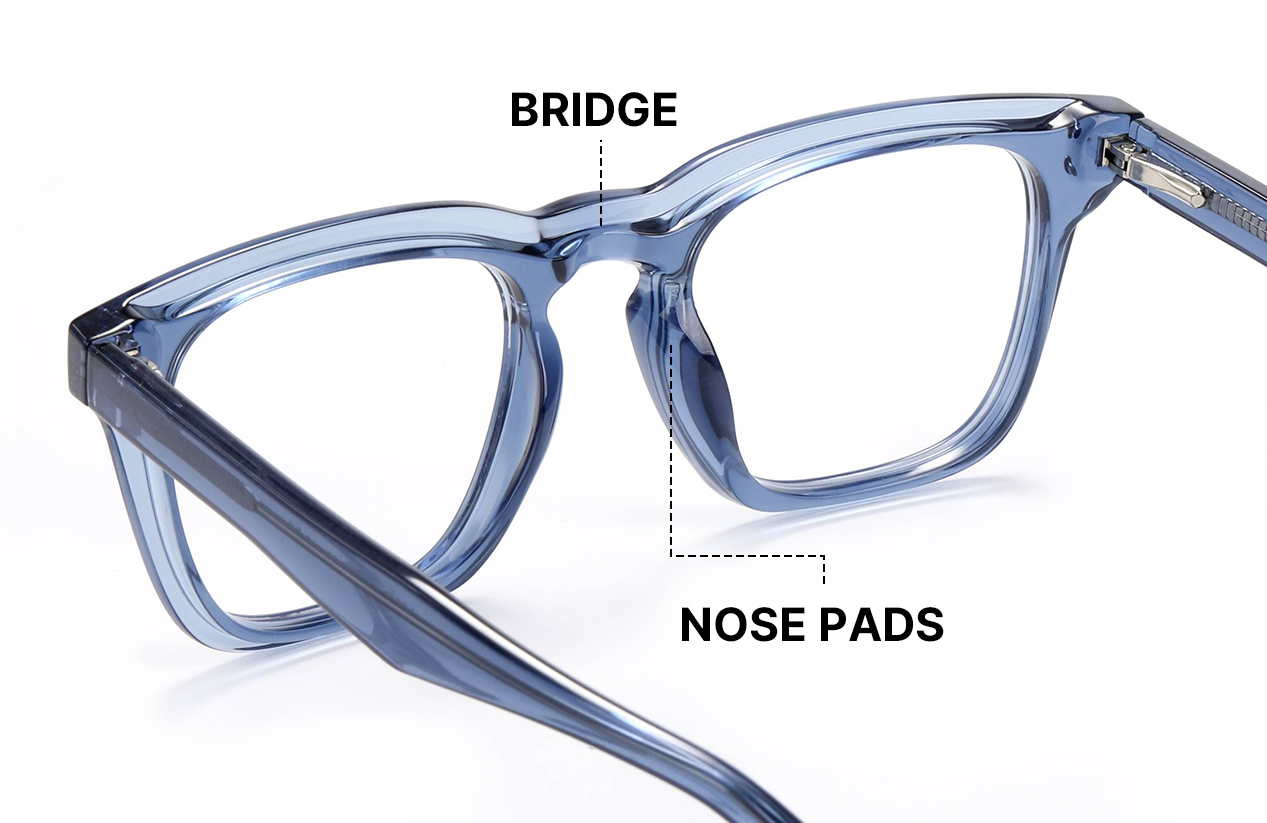
The bridge physically connects the two lens areas and arches over the nose. Bridge fit is arguably the most critical comfort factor. If the bridge is too narrow for your facial structure, the frame will pinch awkwardly. Conversely, if it is too wide, the glasses will perpetually slide down your nose.
Bridge width in glasses refers to the exact horizontal measurement across the bridge area, typically measured in millimeters. It is usually displayed as the middle number in standard frame measurements. For instance, in a frame sized 52-18-140, the bridge width is exactly 18 mm.
Achieving an optimal bridge fit ensures the frame will:
Sit at an ergonomically comfortable height
Feel exceptionally stable on the face
Eliminate painful nose pressure
Keep your prescription lenses perfectly aligned with your pupils
Remain secure during vigorous daily movement
How Temples, Hinges, and Temple Tips Affect Fit
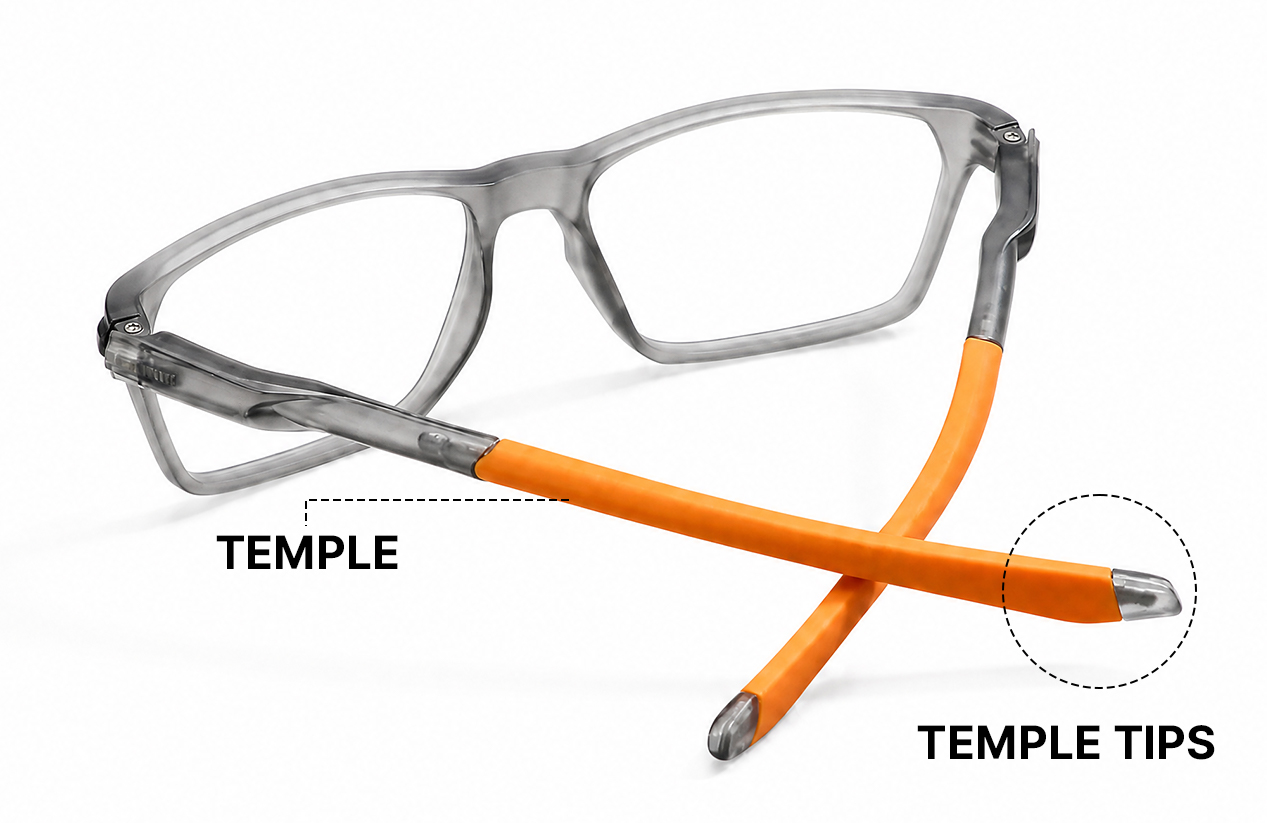
The temples are the elongated side arms of the glasses. Originating at the hinges, they extend backward to hook gently over the ears. Temples securely anchor the glasses against the sides of the head.
Temple length is typically indicated in millimeters and serves as the third number in the standard optical measurement format (e.g., the 140 in 52-18-140).
A well-fitted temple should feel secure without causing any tension. If the temples are too tight, they will dig into your temples and cause headaches. If they are too loose, the glasses will feel notoriously unstable and prone to falling off.
Hinges are the vital mechanical joints connecting the temples to the frame front. Robust hinges guarantee that the frame remains durable and steady during repetitive daily use.
While many glasses feature standard barrel hinges, others utilize premium spring hinges. A spring hinge incorporates a tiny internal spring mechanism that allows the temples to flex slightly beyond ninety degrees. This forgiving flexibility accommodates a wider variety of face shapes comfortably.
Temple tips are the specialized, curved ends of the arms that rest directly behind the ears. Depending on the frame's construction, they may be crafted from bare metal, durable acetate, or soft silicone. High-quality temple tips drastically improve grip and eliminate chafing during prolonged wear.
When analyzing temples and hinges online, always evaluate:
The exact temple length measurement
The overall frame width
The inclusion of flexible spring hinges
The ergonomic curvature of the temple tips
The specific frame material and its total weight
The frame's physical compatibility with hats or headphones
How Nose Pads and Bridge Width Affect Comfort
The nasal area is where the majority of fit issues originate. Eyewear will slide, pinch, sit too high, or leave painful red indentations if the bridge or nose pads are fundamentally incompatible with your nasal structure.
Nose pads for glasses are the small cushioning pieces resting gently against the sides of your nose. They are incredibly common on metal frames and select mixed-material designs. Depending on the manufacturer, these pads are often highly adjustable.
Adjustable nose pads allow opticians to micro-adjust exactly how the glasses rest on your face. They easily correct uneven frame height, mitigate nasal pressure, and drastically improve physical stability. This adjustability is incredibly beneficial for individuals whose frames frequently slide down or rest uncomfortably close to their cheeks.
Alternatively, many acetate and thick plastic frames omit separate nose pads in favor of a molded, built-in bridge. In these specific styles, finding the precise bridge width is paramount, as the resting area is permanently integrated into the frame.
A flawless nose fit feels entirely weightless and balanced. The glasses should anchor securely without indenting the skin, maintaining a consistent optical height even when you look downwards.
How Glasses Parts Help You Choose Frames Online
Mastering optical anatomy significantly streamlines the online shopping experience. Rather than selecting eyewear purely by color or aesthetic shape, you can intelligently evaluate the specific structural elements that govern long-term comfort.
When buying frames for glasses online, scrutinize these crucial metrics before finalizing your order:
Frame width: Helps determine if the eyewear will squeeze your temples or feel overly loose.
Lens width: Influences both your peripheral vision field and the visual proportion of the frame front.
Bridge width: Crucial for determining how securely the glasses will sit on your nasal bridge.
Temple length: Dictates where the arm curve will ultimately rest behind your ears.
Nose pads: Indicates whether the frame supports customizable, adjustable nasal comfort.
Hinge type: Directly affects the frame's physical flexibility and resistance to accidental bending.
Frame material: Drastically alters the total weight, tactile feel, color richness, and durability.
Lens compatibility: Vital if you require specialized prescription lenses, reading lenses, blue light lenses, or sunglasses lenses.
Remember that numerical frame measurements provide a solid baseline, not the entire story. The frame silhouette, building materials, nasal design, and your subjective comfort preferences hold equal importance.
If you currently own a well-fitting pair of glasses, locate the sizing numbers printed on the inside of the temple arm or bridge. Comparing these precise figures to your prospective new frames ensures your next pair will feel wonderfully familiar in size while offering an exciting new aesthetic.
Choose Glasses Frames with Better Fit and Comfort
Superior eyewear requires much more than just a beautiful exterior. Always evaluate the frame front, bridge width, temple mechanics, hinges, and nose pad designs before making an online purchase. These subtle components collectively dictate stability, optical clarity, and everyday wearability. By accurately comparing measurements and selecting a frame style tailored to your daily routine, you guarantee your next pair of glasses will feel just as spectacular as they look.
FAQs
Q1. What Are the Most Important Parts of Glasses for Fit?
The bridge, temples, and nose area dictate the majority of a frame's fit. The bridge ensures the frame rests properly on the nose, while the temples securely anchor the glasses against the head. Overall frame width and exact temple length are equally critical when comparing styles online.
Q2. What Part of Glasses Holds the Lenses?
The frame front and the internal rims physically encapsulate and secure the lenses. Full-rim frames completely encircle the optical lenses, whereas semi-rimless and rimless styles utilize minimalist structural techniques. The ideal choice ultimately depends on your stylistic preferences and lens thickness requirements.
Q3. Are Nose Pads Better Than a Built-In Bridge?
Neither design is objectively superior. Adjustable silicone nose pads allow for micro-adjustments and personalized stability, while a smooth, built-in acetate bridge provides a sleek, uninterrupted aesthetic. The best choice depends heavily on your unique nasal bridge shape and personal comfort preferences.
Q4. Why Does Bridge Width Matter When Buying Glasses Online?
Bridge width firmly establishes how the glasses will rest on your face. A perfectly matched bridge ensures the frame remains securely elevated and perfectly balanced. Comparing the bridge width of a current, well-fitting pair to a new online frame is the most reliable method for predicting a comfortable fit.

