Eyeglasses Guides
Reading Glasses vs Prescription Glasses: Which Pair Fits Your Close-Up Needs?


Tiny text on a menu, a phone screen, or a book can make close-up vision feel much less effortless than it used to. Reading glasses and prescription glasses can both assist with near tasks, but they are fundamentally different. Readers typically offer straightforward magnification for close work, while prescription glasses are completely customized using your personal optical measurements. The right choice depends heavily on your specific vision needs, daily habits, and how frequently you rely on eyewear for close-up tasks.
What Reading Glasses Are
Reading glasses, commonly referred to as readers, are specialized eyewear designed exclusively to assist with close-up tasks like reading small print, checking a smartphone, or inspecting product labels. The vast majority of standard readers utilize the exact same magnifying power in both the left and right lenses.
Lens power is measured in diopters, a clinical unit that indicates exactly how strongly a lens bends and focuses light. Reading glasses frequently come in standard powers such as +1.00, +1.50, or +2.00. While most everyday readers are non-prescription, they can also be manufactured with custom prescription lenses strictly for near-vision correction.
What Prescription Glasses Are
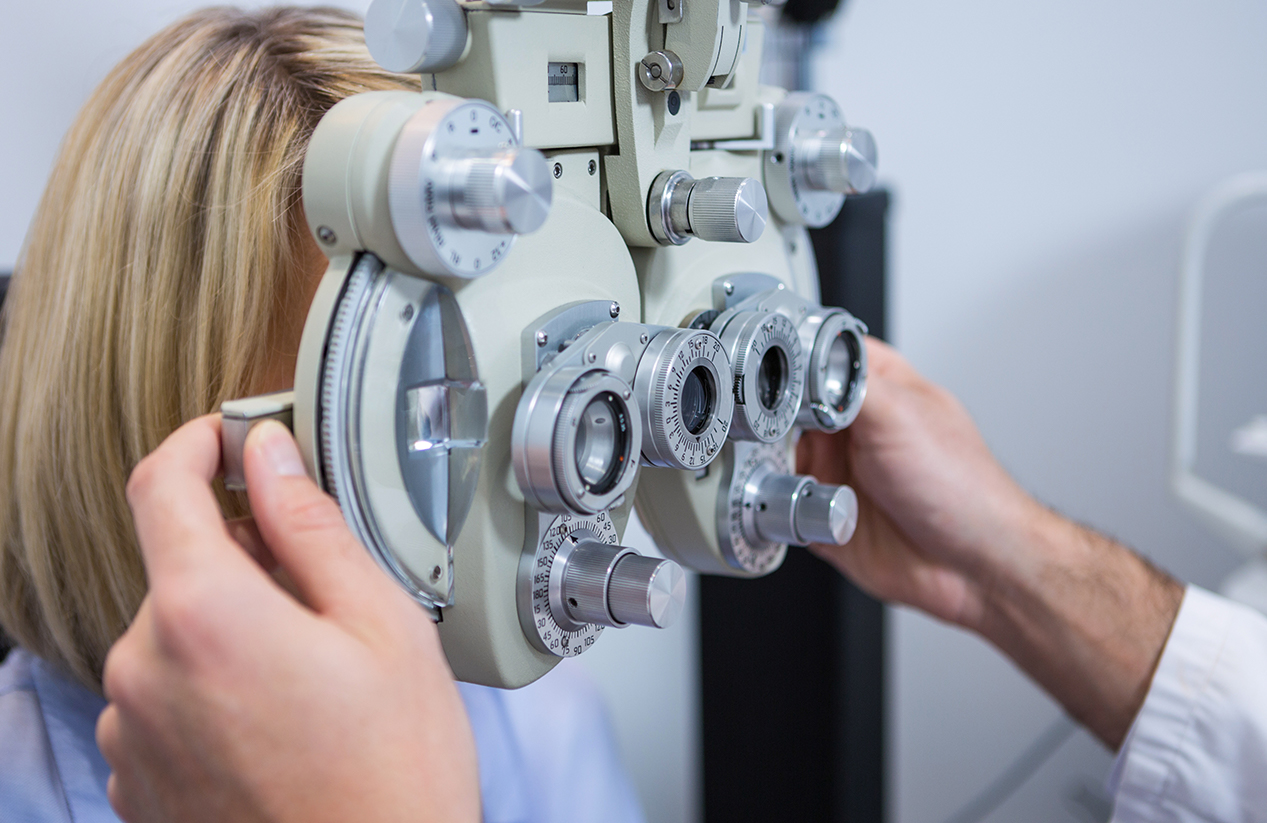
Prescription glasses are customized eyeglasses crafted directly from a clinical prescription written by an optometrist after a comprehensive eye exam. They are engineered to accurately correct distance vision, near vision, astigmatism, or seamlessly manage multiple viewing distances simultaneously.
A standard prescription includes specific values such as SPH, CYL, Axis, ADD, and PD. SPH denotes the primary sphere power, CYL indicates cylinder power for astigmatism correction, Axis specifies the exact angle of that astigmatism, ADD represents additional magnification for near tasks, and PD is your pupillary distance. These meticulous measurements guarantee the lenses are tailored perfectly for your unique eyes.
Reading Glasses vs Prescription Glasses: Key Differences
The table below provides a straightforward comparison of the two primary options to help you understand their distinct advantages.
Feature | Reading Glasses | Prescription Glasses |
|---|---|---|
Main Purpose | Provide basic magnification for close-up tasks | Provide comprehensive vision correction based on clinical data |
Lens Power | Typically identical in both lenses | Individually customized for each eye |
Common Use | Reading books, scanning menus, checking smartphones | Driving, office work, reading, and multifocal needs |
Astigmatism Correction | Not included in standard over-the-counter readers | Fully incorporates CYL and Axis values for astigmatism |
Custom Fit | Offers generic, universally applied near magnification | Manufactured strictly from your personal optical parameters |
Best For | Occasional, straightforward close-up support | Complex, specific, or long-term vision requirements |
This comparison does not imply that one option is universally superior. Instead, it illustrates exactly why individuals choose different optical solutions based on their daily habits.
Reading glasses are incredibly convenient for brief near-vision tasks. They are the perfect solution when both of your eyes require identical magnification and no complex astigmatism correction is needed.
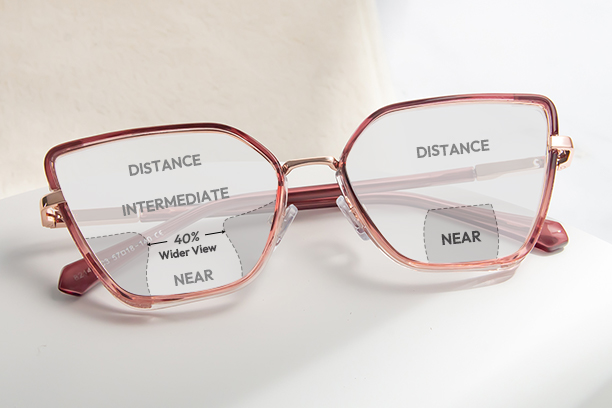
Conversely, prescription glasses are deeply personal. They can be engineered to correct disparate visual acuities in each eye, manage astigmatism, and blend reading, intermediate, and distance powers seamlessly into one frame.
Progressive lenses are advanced multifocal lenses that provide a smooth, line-free transition in optical power from distance to near vision. Bifocal lenses, on the other hand, feature two distinct viewing areas—usually an upper portion for distance and a lower segment for near reading.
If you only experience fatigue when reading fine print, standard readers may be perfectly sufficient. However, if you possess different vision needs in each eye or struggle with both near and distance clarity, prescription glasses are the superior choice.
When Readers May Not Be Enough
While readers are immensely useful, accessible, and practical for tasks like browsing a phone or reading a novel, specific vision challenges demand far more than basic, uniform magnification.
Standard readers fall short when your eyes require different lens powers. Over-the-counter readers deploy the exact same strength in both lenses, whereas true optical prescriptions frequently reveal that the right eye and left eye require entirely different corrections.
Furthermore, standard readers cannot address astigmatism. Astigmatism is a very common focusing irregularity that distorts vision across multiple distances. It can only be properly corrected by integrating precise CYL and Axis values into custom prescription lenses.
Prescription glasses are the medically appropriate choice when:
Your right and left eyes require different optical powers
Your doctor's prescription explicitly includes CYL and Axis values
You require assistance with both long-distance and near vision
You wear glasses for prolonged periods of intensive close-up work
You are transitioning to progressive or bifocal lenses
Your eye care professional has diagnosed a specific reading impairment
Standard readers frequently induce eye strain or headaches during daily tasks
This does not mean you must avoid readers entirely; it simply highlights that readers and prescription glasses fulfill entirely different medical needs. Many individuals smartly utilize basic readers for quick tasks and rely on prescription glasses for sustained, personalized vision correction.
If you remain unsure, consult your most recent eye prescription as a baseline. An optometrist can efficiently clarify whether basic readers, prescription reading glasses, or advanced multifocal lenses best accommodate your visual demands.
How to Choose Reading Glasses Frames for Daily Close-Up Use
Frame choice is equally crucial for both reading glasses and prescription models. Because close-up eyewear is taken on and off multiple times a day, ergonomic comfort and physical durability are essential.
Always prioritize fit. The frames must rest comfortably across your nasal bridge and remain perfectly stable when you tilt your head down to read a book, operate a smartphone, or review paperwork. A frame that continuously slips down your nose will become a severe distraction.
Understanding frame measurements makes online shopping seamless. Lens width dictates the horizontal size of a single lens. Bridge width measures the gap across the nose. Temple length specifies the exact measurement of the side arms resting behind your ears.
If you currently own a comfortable pair of glasses, locate their internal measurements and use them as a direct baseline when evaluating new frames online.
For daily close-up eyewear, strongly consider:
Lightweight frame materials to prevent fatigue during extended reading sessions
A stable, well-fitted bridge designed for downward viewing angles
Adequate lens height to ensure a generously wide viewing area
A frame width that sits in perfect proportion to your natural face shape
Ergonomic temple arms that do not pinch the sides of your head
Aesthetic colors and modern shapes that seamlessly integrate with your wardrobe
Frame silhouettes dramatically influence your overall aesthetic. Rectangular frames project a clean, intellectual, and highly practical look. Round frames offer a softer, vintage appeal. Cat-eye frames provide an elegant, lifting effect, while oval frames remain universally balanced and classic.
If you are searching for premium reading glasses, you likely desire frames that feel significantly more polished than basic drugstore options. In these instances, balance high-quality optical lenses with premium frame materials. A daily-use pair should feel effortlessly stylish whether you are lounging at home, typing at the office, or running weekend errands.
Finally, lens dimensions matter. Micro-lenses function fine for glancing at a receipt, but larger lenses offer superior comfort for sustained reading. If you frequently shift your focus between a textbook, a smartphone, and a laptop monitor, a slightly taller lens provides the practical viewing real estate you need.

Reading Glasses for Phone, Office, and Everyday Tasks
Close-up visual requirements extend far beyond printed books. Modern lifestyles heavily rely on near vision for smartphones, tablets, product labels, restaurant menus, detailed crafting, and intensive desk work.
For smartphone reading, ultralight readers are exceptionally convenient because they can be comfortably carried in a pocket. A secure bridge fit is vital here, as users spend significant time looking downwards at their devices.
For dedicated office environments, lens requirements shift entirely. A computer monitor typically sits much farther away than a paperback novel. Because standard readers are engineered exclusively for extreme close-up distances, they often cause users to lean awkwardly toward their screens. Custom prescription glasses, computer glasses, or specialized occupational lenses dramatically improve posture and visual comfort at a desk.
Computer glasses are precisely calibrated for intermediate screen distances—the visual range falling right between close-up reading and far-distance viewing.
When selecting your ideal everyday eyewear, identify where you demand clear near vision the most:
Reading novels, newspapers, or printed documents
Navigating smartphones or operating digital tablets
Working extensively at a desktop computer
Preparing meals and reading intricate recipes
Evaluating nutritional information on product labels
Engaging in precision hobbies or fine crafts
Scanning menus or reviewing physical receipts
Identifying your primary task simplifies the decision-making process. Occasional, quick tasks may only necessitate standard readers. Conversely, prolonged digital work or mixed-distance environments strongly indicate the need for customized prescription glasses.
Choose Reading Glasses or Prescription Glasses with More Confidence
Reading glasses serve as a highly practical, cost-effective solution for straightforward magnification tasks, whereas prescription glasses deliver unparalleled, personalized optical correction. By carefully evaluating your daily habits, medical prescription requirements, and ergonomic preferences, the correct choice becomes clear. If your visual demands are uniform and basic, standard readers will perform admirably. However, if your eyes require sophisticated correction for astigmatism or varying distances, investing in custom prescription glasses guarantees a vastly superior experience for reading, working, and daily life.
FAQs About Reading Glasses vs Prescription Glasses, Users & Lens Power Selection
Q1. Are Reading Glasses the Same as Prescription Glasses?
No. Reading glasses generally offer generic, uniform magnification for simple near-vision tasks. Prescription glasses, however, are clinically manufactured using your personalized eye prescription. They can accommodate varying optical strengths for each eye, correct astigmatism, and seamlessly integrate multifocal requirements into a single lens.
Q2. Who Usually Uses Reading Glasses?
Reading glasses are predominantly used by adults experiencing difficulty focusing on close-up details like small print, smartphones, or ingredient labels. This natural, age-related shift in near focus is clinically known as presbyopia. A certified eye care professional can properly evaluate your eyes and confirm the exact lens type you require.
Q3. Can Readers Replace Prescription Glasses?
While readers are excellent for quick, simple magnification tasks, they cannot replace prescription glasses for everyone. If your optometrist has identified astigmatism, distinct power discrepancies between your left and right eyes, or concurrent distance vision issues, prescription glasses are medically necessary. The optimal choice is always dictated by your clinical prescription and lifestyle.
Q4. How Do I Choose the Right Reading Glasses Power?
The optical power of reading glasses is denoted by a positive number, such as +1.00, +1.50, or +2.50. The correct strength relies entirely on your required reading distance and the natural focusing capability of your eyes. If you experience persistent eye strain, or suspect your eyes require different strengths, always consult an optometrist before purchasing standard readers.